Tag: family travel

  • teamLab Biovortex Kyoto: A Digital Wonderland in Cultural Kyoto

    teamLab Biovortex Kyoto: A Digital Wonderland in Cultural Kyoto

    So, in my most recent travels, I once again found myself in what is arguably one of the most popular destinations for Singaporeans — if not the most popular — Japan. This time, the journey focused on Central Japan’s Kansai region, specifically Osaka and Kyoto.

    Both cities are wildly popular, though for very different reasons.

    Let me start with Kyoto, which has welcomed a new attraction since October 2025 – teamLab Biovortex Kyoto.

    A teamLab Exhibition in Kyoto?

    If you’re familiar with teamLab, you’ll know they’re behind some of the world’s most captivating and mesmerising digital art installations, found in cities such as Osaka, Tokyo, Abu Dhabi, Miami and Singapore.

    So you might be thinking — a teamLab exhibit in cultural Kyoto? A city celebrated for its stunning Buddhist temples like Kiyomizu-dera, Shinto landmarks such as Fushimi Inari-taisha with its iconic torii gates, the timeless beauty of Arashiyama’s bamboo groves, and the traditional geisha streets of Gion?

    The idea of a modern, tech-driven attraction in Kyoto might conjure images of a futuristic, high-tech structure — but Biovortex’s exterior looks nothing like that.

    A Hidden World Inside

    Non-glitzy and quietly tucked away in a residential area, you’d never guess that inside lies a multi-level world of immersive, interactive digital art.

    Step in, however, and it’s a completely different story.

    The artwork 'What a Loving, and Beautiful World'
    ‘What a Loving, and Beautiful World’, one of the first artworks to greet you.

    For photo lovers, it’s an absolute Insta-paradise. For children, it’s hours of play and exploration. And yes — even adults will find themselves fully absorbed.

    As fans of the teamLab attractions (we previously visited teamLab Planets Tokyo, we were completely blown away by Biovortex Kyoto — teamLab’s 23rd exhibition and its largest permanent attraction to date.

    Located just a stone’s throw from Kyoto Station, Biovortex opened its doors on 7 October 2025, and we were there on the third day of its opening. And a huge bonus — it was also just about a street away from our hotel at Mimaru Kyoto Station. More about that in a later post.

    What to Know About teamLab Biovortex Kyoto

    • Maze-like layout, spanning four floors
    • Covers over 10,000 square metres
    • Features 50+ interactive and immersive digital artworks, with some totally brand new or unique to Kyoto

    The Core Concept: Environmental Phenomena

    Unlike traditional installations, many works here are not solid in form. Instead, they play with light, air, water, movement, and even bubbles, constantly changing based on the environment and human interaction.

    New installations:

    • Massless Amorphous Sculpture – this was especially fun. Definitely a favourite with kids!
    • Megaliths in the Open Universe
    • Transient Abstract Life and Return
    • Forest of Resonating Lamps

    Other highlights:

    • Morphing Continuum – my personal favourite and you’ll see why in this video below.
    • Forest of Flow and Light
    • Massless Suns and Dark Suns

    Fun Zones for Kids (and Energetic Adults)

    Athletics Forest

    Athletics Forest

    A high-energy zone filled with vibrant colours, neon tones, and luminous lights. Kids can jump, balance, bounce, and climb — perfect for burning off energy while engaging with art.

    Floating Cosmic Spheres

    Future Park & Sketch Factory

    Always a crowd favourite. Let your creative juices flow — sketch, colour and watch your creations come alive on giant digital screens. You can even turn them into souvenirs like magnets, puzzles, and tote bags to take home.

    Digital art doesn’t mean kids can’t appreciate it. This is a fully sensory, immersive experience for the entire family.

    Getting there…

    It opens daily from 9am to 9pm, with last admission at 7.30pm. Do note that it might be closed on certain Tuesdays, so please check when purchasing tickets.

    Location: 21-5 Higashikujo Higashi-Iwamotocho, Minami-ku, Kyoto City. It’s pretty easy to get there.

    • About a 7-min walk away from the Hachijo East Exit of JR Kyoto Station
    • 11-minute walk from Shichijo Station (Keihan Line)

    Ticket prices

    • Adults: ~USD 31
    • Students (13–17): ~USD 19
    • Children (4–12): ~USD 12
    • Flexible pass (enter anytime): ~USD 82

    You can get them on Klook which has periodic sales (at the time of writing this, it’s offering a free 3GB eSIM). You can click on my link or the banner below and purchase the tickets right away!

    While the minimum suggested visit is 1.5 hours, I’d recommend setting aside around 3 hours to fully explore, take photos, and truly immerse yourself in the experience.

    Klook.com

    This post may contain affiliate links. If you click on them and make a purchase, I may earn a small commission at no extra cost to you. Thank you for your support!

    Kyoto will always be known for its temples, shrines, and traditions — and rightly so. But Biovortex Kyoto shows that the city also has space for innovation, creativity, and digital wonder. If you’re planning a Kansai trip, this is one stop that deserves a place on your itinerary — not just as an attraction, but as an experience. It offers a refreshing contrast to its traditional sights, and for families travelling with children, like us, it makes a fantastic addition to your Kyoto itinerary.

    Your kids will love you for it!
  • Chiang Mai’s Historic Old City, Temples and Light Shows

    Chiang Mai’s Historic Old City, Temples and Light Shows

    Chiang Mai Old City – lined with a moat around, it was once the capital of the Lanna Kingdom in the 13th century. Today, the remnants of its city walls and gates still stand, offering a glimpse into its storied past. It is a town filled with cosmopolitan cafes, serene Buddhist temples, bustling local markets and the perfect base for day trips around Chiang Mai.

    Unlike the modern buzz of Bangkok with its sprawling malls and skytrains, the Old City feels like a laid-back cousin — a charming blend of history, spirituality and quaint urban cafes.

    A City of Temples

    One of the most remarkable aspects of the Old City is its density of temples — over 30 Buddhist temples (known as Wats) are packed into just 1.6 sq km. That’s more temples per square metre than almost anywhere in Thailand!

    Did You Know?

    • Thailand has over 40,000 temples.
    • Bangkok has more than 400.
    • Chiang Mai has over 300.

    No wonder it’s called the Land of Temples!

    If temple-hopping is on your list, the Old City is the best place to start. Here are some of the most significant ones to visit:

    • Wat Phra Singh – This is probably the most recognised temple and the most revered in the Old City. It is also known as the Golden Temple. Much of its architecture is covered in gold. Prominent in its grounds is its giant golden chedi, a distinctive feature that you surely cannot miss. The temple dates back to 1345 and houses the sacred relic of the Phra Singh Buddha, which is believed to have originated in Sri Lanka. 
    • Wat Chiang Man – This is the oldest temple, known as the first royal temple of Chiang Mai. It was built in 1296 by King Mengrai of the Lanna Kingdom. The temple sits tucked away near the northeast corner of the city, off Ratchapakhinai Road.
    • Wat Phan Tao – Built entirely of teak wood and often overlooked, it has a serene charm. Located next to the sacred Wat Chedi Luang, the temple was originally a throne hall for King Mahotara Prateth. Its origin dates back to the 14th century. It is also known as the “Temple of a Thousand Kilns” because of its historical role in producing Buddha images using numerous small clay kilns — especially during the Lanna period. Today, the temple is a key site for cultural festivals like Loy Krathong (Festival of Lights) and the Yi Peng Festival (Northern Thai Lantern Festival).

    The Temple of the Great Stupa – Wat Chedi Luang

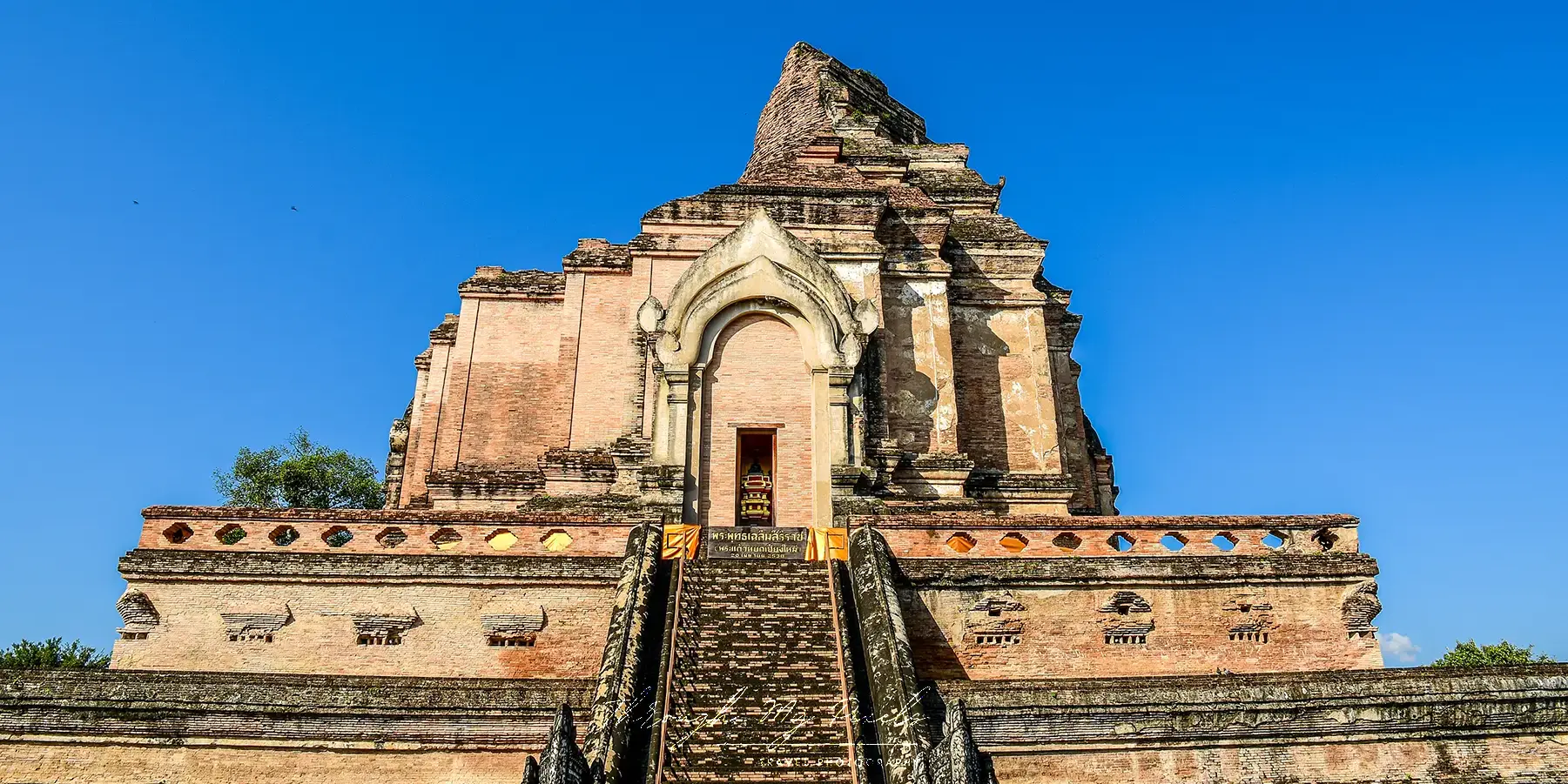
    For me, the highlight has to be Wat Chedi Luang, the feature image of my post. Don’t you think it has the Indiana Jones vibes?

    Distinct from the other temples, which are usually adorned with gold, this sacred temple has been preserved in its ruins.

    Building of the temple started in 1391 but it was only completed nearly a century later. Then, it was considered one of the largest temples with a 85m-tall chedi, giving it the name “Temple of the Great Stupa”. However, an earthquake in 1545 destroyed much of it and it was only partially restored in the 1990s.

    The temple is significant in the history of Thailand as it used to house the Emerald Buddha, Thailand’s most sacred relic, for about a hundred years. Following the earthquake, it was moved to Wat Phra Kaew in Bangkok in 1551. Now, what you’ll see is a replica at the top of the temple’s staircase.

    For me, there’s something truly special about photographing ruins like this — they preserve the spirit of the past and bring a mystical quality to every frame.

    But Wat Chedi Luang also has a modern look. Below are photos of the main viharn, which faces the main entrance. Dating back to 1928, it contains the large standing Buddha image Phra Chao Attarot. The viharn itself is quite an intricate work of art. So, interestingly, the entire site is a mixed of modernity and its past.

    A Photowalk Through the Old City

    Take time to also go on a leisurely stroll of the Old City. The streets are very walkable and easy to navigate, with the four gates (North: Chang Phuak, East: Tha Phae, South: Chiang Mai, West: Suan Dok) serving as key entry points. There’s always Google Maps if you really need help.

    Other than tourists on temple walks, you’ll also see the locals going about their day, street vendors selling ice cream and drinks from their push carts, tuk-tuks buzzing by, numerous massage shops, cafes to pop into for a quick coffee or tea break and of course, night markets, which are quite an Asian thing.

    So walk around, explore and snap photos to tell your story of Chiang Mai and its Old City.

    I’ve pinned down some of these locations in the map below for reference.

    The Charming Chiang Mai Flower Festival

    We stumbled upon this unexpectedly — and what a lovely surprise it was! I think it adds another dimension to the tour, where much of it has been about nature, sacred spaces and old towns – Doi Suthep, Doi Inthanon, Mae Kampong, Mae Rim. The Charming Chiang Mai Flower Festival showcases lights and technology. It’s about vibrance!

    The 2024 festival was held at the Chiang Mai PAO Park from 29 November 29 2024 to 5 January 2025. While details for 2025/2026 are yet to be announced, it usually takes place around the same time each year.

    It’s free to attend and open daily from 8.30am to 11pm. So, keep an eye on their Facebook page for the latest updates.

    Festival Highlights:

    • Stunning light displays
    • Hourly Fountain shows (7pm to 10pm)
    • ‘Live’ music performances
    • Firework displays
    • Night market and food stalls
    • Foral garden of tulips, orchids, and lilies during the day

    Consider staying at The Rim Resort

    The Old City offers a range of stays from charming guesthouses in quiet alleyways to boutique hotels with Lanna-style decor. One place I would recommend would be The Rim Resort.

    The resort is tucked along the quiet western edge of the Old City. While not in the city central, its quiet location offers the respite that you need, yet keeping you relatively close to what the city and the outskirts have to offer.

    Wat Phra Singh is a 5-min walk away, The Sunday Walking Street Market about 10min away and One Nimman and Maya Lifestyle Shopping Centre at the outskirts is a short tuk-tuk ride away.

    The accommodation is comfortable and homely. The rooms are quite spacious with separate bathtubs and showers, and the daily breakfast was delightful. Our room came with free welcome drinks and Thai snacks. We were also given a voucher to redeem a bowl of the famous Khao Soi at the restaurant and it was deliciously good! There are also free snacks available daily at the hotel lobby which is a treat especially for the young ones.

    What stood out most was its excellent customer service which puts us right at ease. They take great care of our needs whenever we need.

    Whether you’re travelling alone, as a couple or with children, I think The Rim will make a lovely stay.

    This post may contain affiliate links. If you click on them and make a purchase, I may earn a small commission at no extra cost to you. Thank you for your support!

    And that about wraps up what I wanted to share about Chiang Mai! There are so many more fascinating places and experiences I wasn’t able to cover this time. But perhaps that’s something to look forward to on my next visit to the former Lanna Kingdom. Until then, sawasdee ka!

    Klook.com
  • Elephant POOPOOPAPER Park: What Dung Can Do

    Elephant POOPOOPAPER Park: What Dung Can Do

    Yes, you read that right — elephant poo poo. And yes, it’s fascinating.

    Located in Mae Rim, just about a 30-min drive from Chiang Mai’s Old City, Elephant POOPOOPAPER Park is one of those quirky, unexpected places that turns into a surprising highlight — especially if you’re travelling with kids (or adults with a good sense of humour).

    It’s a refreshing change of pace from temples, flowers, or markets — and it’s educational, sustainable, and genuinely fun!

    So… what exactly is it?

    When planning my trip to Chiang Mai, I knew I wanted to skip the typical elephant park visits and performances. Yet elephants are quite central to Northern Thailand and Chiang Mai, so it’ll be remiss if there wasn’t some kind of elephant experience. That’s when I came across this park, which I found quite interesting, a park that makes paper out of elephant dung.

    Sounds gross? A little. But also intriguing, right?

    This eco-friendly outdoor museum and workshop shares with visitors how elephant dung is transformed into chemical-free, usable paper — and lets you try making some yourself!

    Elephant PooPooPaper Park

    Did you know?

    • Elephants eat a lot of fibre and digest only about 45% of it.
    • The undigested fibre in their dung is perfect for papermaking.
    • Just 50kg of dung can produce around 125 sheets of A4 paper.

    It sounds weird (and yes, maybe a little gross), but the process is completely hygienic (they wash and boil everything multiple times) and genuinely impressive. And it doesn’t smell — seriously!

    This is thanks to their vegetarian diet. Hmm… consider a vegetarian diet, anyone?

    Still… dung as paper, really?

    Thailand isn’t alone in this eco-innovation. Among some of the countries are India, Sri Lanka and Kenya. In Uganda, a group of women have been trying to combat poaching by turning elephant dung literally into a treasure – paper, and a livelihood.

    Elephant POOPOOPAPER is one of the most environmentally-sound papers made today. Following its success, the park has also added paper made from the dung of cows, horses and donkeys. Now that’s sustainability for you!

    All that processed paper is made into eco-friendly products like stationery collections and gift items like bookmarks, photo albums, cards, paper pads etc, which make for unique, earth-friendly souvenirs.

    It’s chemical-free, organic, sustainable, innovative and fun!

    According to their website, its pulp is composed totally of natural materials. About 85% come from elephant, cow, horse or donkey poo fibres, with the remaining 15% from waste agriculture bi-products, like coconut shell fibres, banana stocks, corn husk fibres and sugar cane.

    What to expect

    The experience is a hands-on, interactive experience, especially fun for kids. A friendly guide walks us through each step of the papermaking process:

    • Collection and cleaning – Learn how the fibres are washed and boiled.
    • Pulp preparation – Mix the mushy fibres into pulp. We had some fun and laughter doing this!
    • Sheet forming – Scoop, flatten, and spread the pulp into thin paper sheets.
    • Drying and decorating – Introduces the natural dyes that can be added to create patterns or colours to the paper.
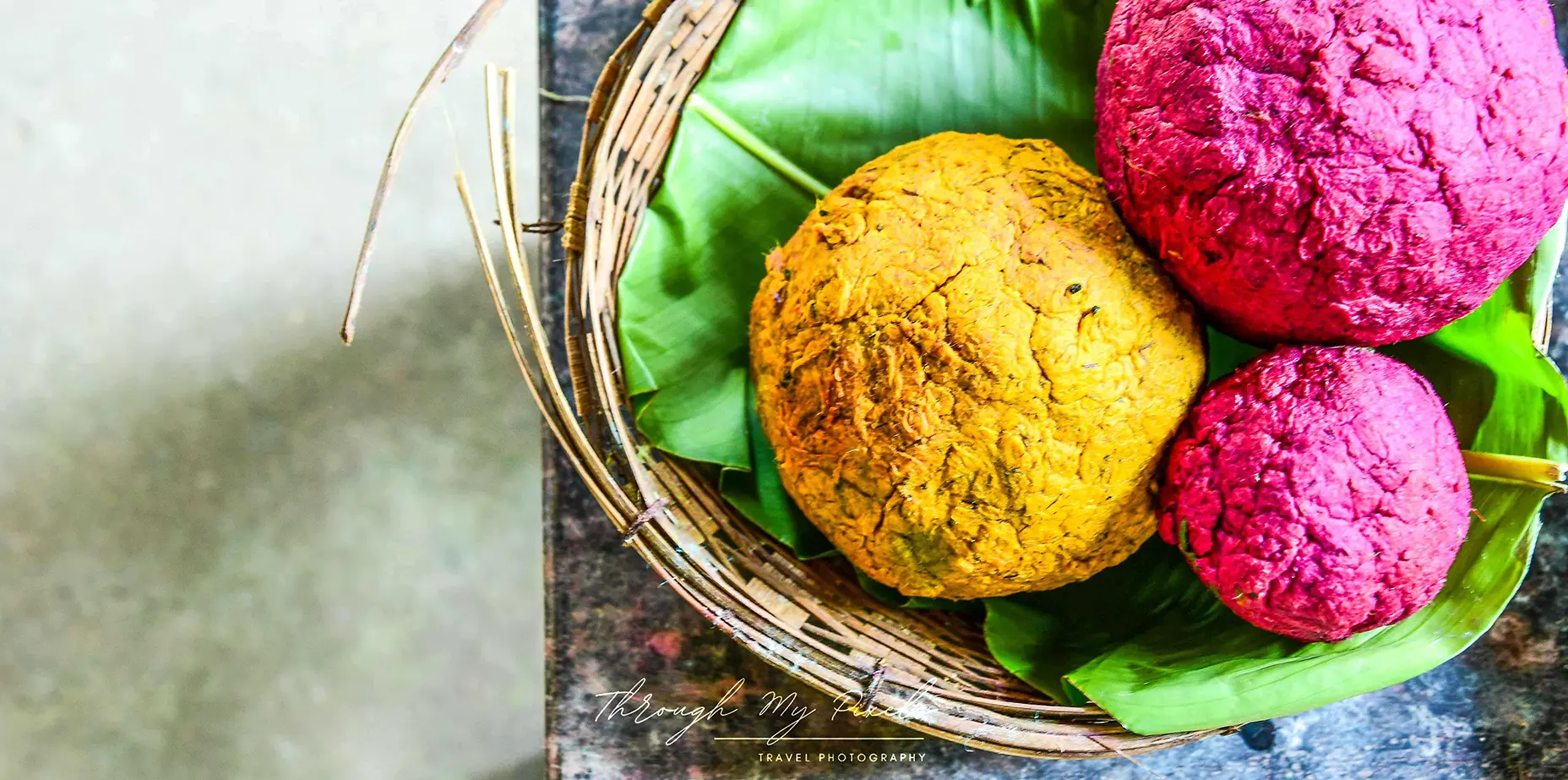
    Dye, paper cutouts, dried elephant poo

    There are also fun DIY craft stations where you can make greeting cards, notebooks, or even little poo-paper elephants to bring home. They also have an art studio workshop if you want to flaunt your artistic flair! (Note: additional fees apply for both activities.)

    Check out this cute and informational YouTube video by kids on their visit to the park!

    Worth a visit

    • Eco-conscious and educational – Great way to teach kids (and adults) about sustainability.
    • Something different – A break from flowers, temples and markets, with lots of laughs and fun photo ops.
    • Great gift shop – Full of pretty and well-designed paper products.

    F.Y.I.

    • Opening Hours: 9am – 5pm daily
    • Entry Fee: 150 THB/pax, free for kids below 5 (includes the guided tour)
    • Duration: Allow about 1hr or more for a relaxed visit. Guided-tour takes about 40min.
    • Location: 87 Moo. 10, T. Maeram, A. Maerim, Chiang Mai 50180 Thailand
    • Tours available: English, Thai and Mandarin.
    • Tip: Book online in advance for guaranteed slots.

    Ready to see what dung can do?

    Elephant POOPOOPAPER Park is a fun and interesting place that’s certainly worth a visit, not just for children but for adults too. It’s a chance to laugh, learn, and appreciate sustainability in a way you probably never expected.

    And hey — not everything needs to be pretty to be photographed, right? Sometimes, the best travel memories come from the unexpected and the unusual.

    So go ahead, book your ride there or check out Viator and Pelago for a bundled tour with the Sticky Waterfall or the Karen Long Neck Hill Tribe Village.

    This post may contain affiliate links. If you click on them and make a purchase, I may earn a small commission at no extra cost to you. Thank you for your support!

  • Be enchanted, with Mae Rim

    Be enchanted, with Mae Rim

    Mae Rim offers a different vibe from Doi Inthanon National Park and Mae Kampong.

    A little north of the Doi Suthep mountains, Mae Rim is known for its gorgeous mountain views, natural attractions, and a slower pace of life. Up here, you’ll find everything from flower farms and cafes to glamping resorts tucked into the hills. The region is also home to the indigenous Hmong people, adding cultural depth to the natural beauty of the place.

    Mae Rim
    Dried chilli
    Chiang Mai locals
    Chiang Mai locals

    I think young couples and newlyweds can consider spending a night glamping here. Waking up to the sounds of birds, catching the sunrise and enjoying a breathtaking view of the mountains and valleys. It certainly makes for a romantic getaway!

    But alas, we were travelling with a big group of seniors and children, so glamping was out of the question. But hey, Mae Rim still has lots to offer!

    Where is Mae Rim?

    Mae Rim is just 25km to 30km away from Chiang Mai’s Old City, making it much closer than Doi Inthanon and Mae Kampong. As you can tell by now, the Old City tends to be the base, where many do their day trips from.

    Once again, I would advise booking a private hire car or van if you are not driving. Or consider joining a small group tour. The ride up is rather winding but scenic.

    There are lots to see at Mae Rim. The Mon Jam area is where you will find many farms and flower gardens. The Queen Sirikit Botianic Garden is also a highlight with canopy trails, glasshouses with tropical plants and forested walking paths. There’s also the Mae Sa Waterfall, which is a very popular spot with the locals and makes for a nice stop for a picnic or a short hike. Taking advantage of its scenic location, there are also many lovely cafes with outdoor seating to chill and enjoy nature’s gift.

    So, where do we start? We couldn’t cover everything, but here’s what we managed to visit:

    I’ve plotted the locations in Google Maps below, including the directions for easy reference. The ride from the Old City to Pang Hwa Flower Garden takes about 50min to an hour.

    Mon Jam

    A highlight of the Mae Rim district is Mon Jam (also spelled Mon Cham). This beautiful mountaintop area at 1,300m above sea level is known for its cool weather, panoramic views and agricultural projects.

    On a clear day, you’ll see layers of misty hills, green terraced farms and a sky that… seems to go on forever.

    Once a quiet Hmong village, Mon Jam began transforming into a travel destination thanks to the Royal Project Foundation, which helped locals shift from slash-and-burn farming to sustainable agriculture. Today, you’ll see farms growing strawberries, cabbages, herbs, and flowers, as well as small local cafes, food stalls, and homestays scattered along the hillside. The area also has skywalks, zip-lines, and ATVs for those looking for a bit of light adventure.

    Mon Jam glamping and homestays
    Mon Jam glamping resorts

    Mon Jam is also where you will find glamping resorts. There are more than 20 glamping sites. Homestays are also available if you want to experience staying with the locals.

    This post may contain affiliate links. If you click on them and make a purchase, I may earn a small commission at no extra cost to you. Thank you for your support!

    Pang Hwa Flower Garden

    This wasn’t on our original itinerary. We had planned to visit Jin Ju Orange Farm but it was closed — so our driver suggested Pang Hwa Flower Garden instead. And OMG, what a great suggestion it was!

    Tourist admiring Mae Rim

    Did you know that there are reportedly 13 or more flower farms in Mae Rim, particularly around Mon Jam. For flower lovers, it’s an absolute paradise. That said, I don’t think you need to cover them all — even if you love blooms. And it also depends on when you visit.

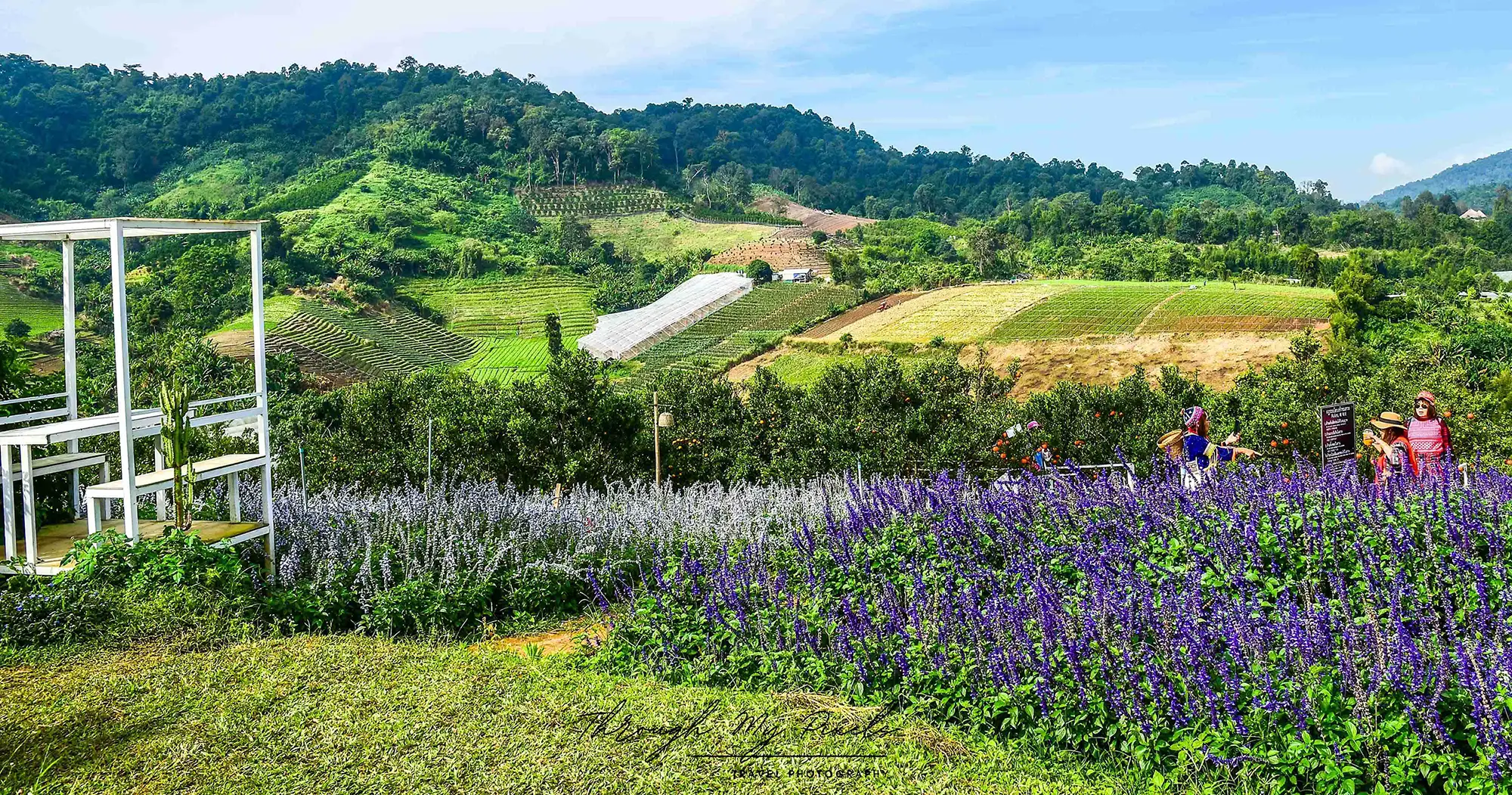
    Pang Hwa is an Instagrammer’s dream: colourful flower beds, rolling hills, a mountain-top setting close to the clouds. There’s a lavender garden and an orange orchard where you can also pick oranges. So we didn’t miss Jin Ju Orange Farm too much!

    There’s also a cafe here — perfect for soaking in the views with a hot drink in hand.

    • Open daily: 7am – 6pm
    • Entry fee: 100 THB (foreigners)
    • Orange-picking: 80 THB/kg

    Ying Yong Flower Garden

    Located in the Mon Jam area, the garden spans 16 acres and showcases a stunning variety of flowers like lavender, marigolds and sunflowers, set against a backdrop of blue skies and emerald green mountains.

    Yes, I’m going to say it again: Instagrammable. And truly, it is.

    They’ve done a great job of accentuating the natural beauty with walking trails and scenic viewing spots. One of the highlights here is an elevated boardwalk that stretches across the fields, offering sweeping panoramic views of Mon Jam.

    Currently, Pelago has a private tour which includes visiting Ying Yong and Pang Hwa gardens, along with a homestay lunch — a great way to experience local hospitality. There is also a short day tour which includes Mon Jam and Huay Tueng Thao Reservoir and Sculpture Park (quite a fun place with King Kong sculptures, sheep farm and others that should be fun for young children).

    Honestly, words don’t quite do it justice. So I’ll let the pictures do the talking.

    The best time to visit is between November to February when flowers are in full bloom and the weather is cool. But of course, there are other flowers to see in other times of the year, like sunflowers from March to May, margarets from June to August and marigolds from September to October.

    Whatever the time of the year you wish to go, just be warned, you won’t want to leave.

    • Open daily: 6am – 6pm
    • Entry fee: 100THB (foreigners-adult), 50THB (foreigners-child <10 years old)

    Skywalk Flower Farm

    By the time we arrived at Skywalk Flower Farm, the kids had pretty much hit their limit for flower appreciation. (Can’t blame them — after a full day of blooms, even the most patient little legs will start protesting.) But for us adults, this is a place you won’t want to miss.

    Similar to Ying Yong Flower Garden, there’s also an elevated boardwalk — but the view here hits differently. It overlooks a sheep farm, rolling valleys and offers yet another perspective of Mae Rim’s mountainous landscape.

    One standout feature here is a palm-shaped platform, perched dramatically over the hillside. Ready to feel on top of the world? Climb the steps — though be warned, there are no railings — and strike your poses. The view from the top is incredible and definitely one for the ‘Gram. Just don’t look down if you’re not a fan of heights! I tried… and I remember feeling weak in the knees!

    Nearby, there’s also a cosy cafe where you can relax, sip a latte and just gaze at the scenery.

    • Open daily: 7am – 8pm
    • Entry fee: 40THB (adults), 20THB (child)

    Want a sneak peek before you visit? Check out this beautifully shot video by Beyond — it captures the essence of Skywalk Farm perfectly.

  • Mae Kampong: A gem in the mountains of Chiang Mai

    Mae Kampong: A gem in the mountains of Chiang Mai

    If you’re looking for an authentic Thai village experience, pay a visit to Mae Kampong.

    To be honest, it wasn’t on my original list of places to explore in Chiang Mai. It was a recommendation from my uncle’s friend, who lives in the city. “It’s a beautiful, quaint village,” he said—and he wasn’t wrong.

    About an hour’s drive, 50km east from the Old City, Mae Kampong seems to be a popular place, judging by the many tour buses we saw parked and the number of people walking along the street.

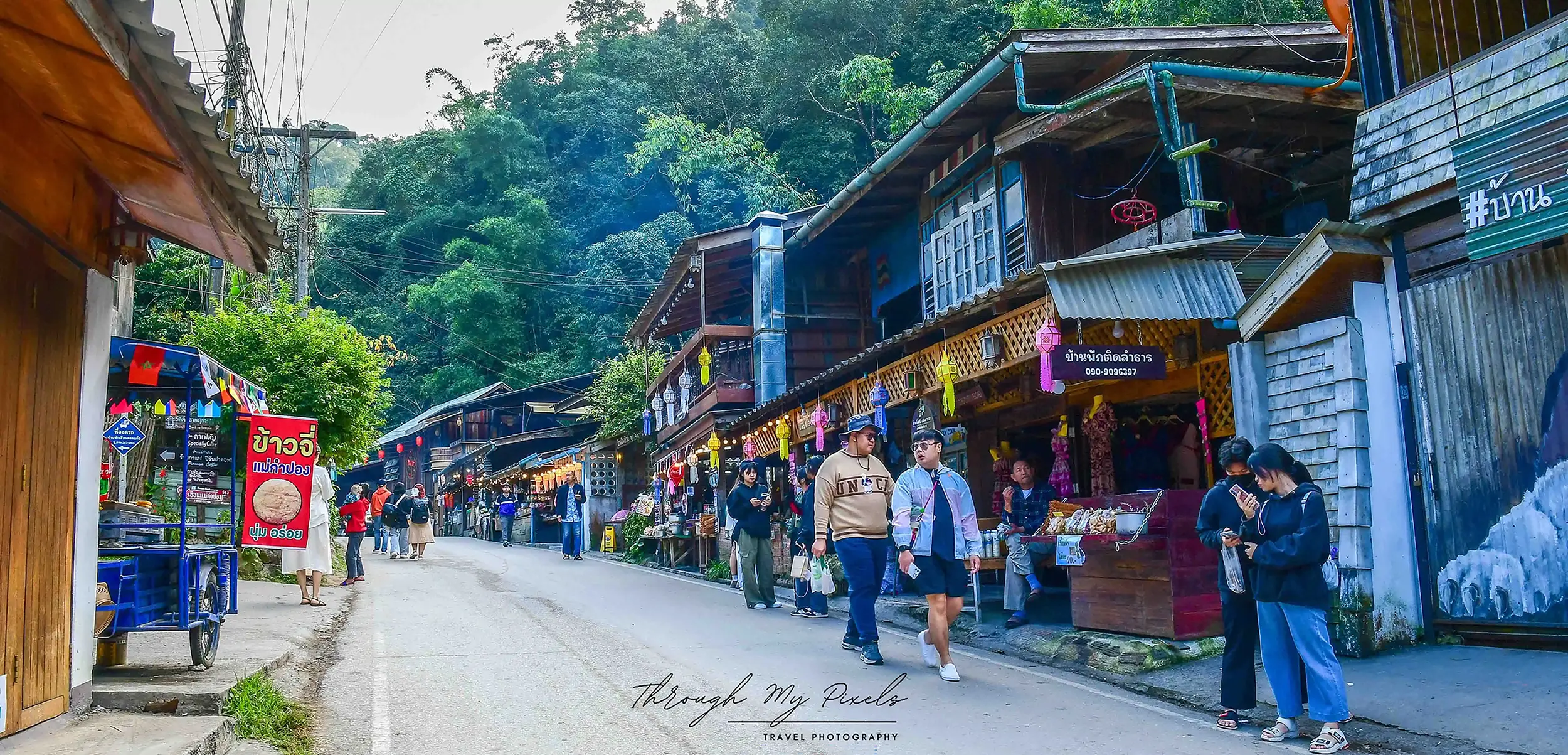
    Wooden buildings line both sides of a narrow two-way street. From my understanding, the village is over 100 years old, with only about 500 residents. Sitting at 1,300m above sea level, Mae Kampong enjoys cool, crisp weather all year round — a refreshing break from the heat of the city.

    Street Photography

    I did some street photography here to try and capture the vibe of the village. For street photography, you don’t need dramatic angles or big lenses — just a good eye and patience.

    Here are a few scenes worth framing:

    • Daily life in motion — Whether it’s someone selling street food, tending to their shops, or sweeping the front of their home, these candid moments reflect the soul of the place.
    • Rustic architecture — Weathered wooden signs, bamboo fences, moss-covered roofs, and faded shopfronts all tell a story.
    • Close-ups of street food — See something unusual or mouthwatering? Snap it. Local snacks make great conversation starters and Instagram content.

    A quick note on etiquette: Be respectful. If you’re photographing people up close, it’s always best to ask first. Most locals are kind and open, especially if you smile and engage with them.

    Even with just a smartphone, Mae Kampong is incredibly photogenic. It’s not about the gear — it’s about noticing the beauty in the everyday.

    Community-Based Tourism

    The village became a popular tourist destination about 20 years ago with the introduction of community-based tourism (CBT).

    CBT is a form of responsible travel where local communities manage, operate, and benefit directly from tourism in their area, without losing control of their culture, environment, or values.

    In the 1980s, residents began cultivating coffee under the Teen Tok Royal Project, which supports sustainable farming and agro-education in northern Thailand. This initiative played a major role in supporting the village’s transition from traditional farming to eco-friendly tourism.

    Today, you’ll find charming mom-and-pop shops, humble restaurants, and coffee houses dotting the village. Several residents also offer homestays — a great way to experience local hospitality and the soothing rhythms of mountain life. Some are available on platforms like Agoda.

    This post may contain affiliate links. If you click on them and make a purchase, I may earn a small commission at no extra cost to you. Thank you for your support!

    The village is compact, so you can easily explore it on foot. Take your time walking down its single main street, browsing the local craft shops, trying street food, and stopping for coffee with a view. One of the highlights is doing nothing—just soaking in the peaceful, unplugged atmosphere.

    Don’t expect resorts, nightlife, or even strong Wi-Fi. And that’s part of its charm. It invites you to unplug and slow down.

    Getting there

    It takes just over an hour to reach Mae Kampong by car from Chiang Mai. If you’re travelling in a group, hiring a private vehicle can be convenient and cost-effective. Klook is a good place to check for transport options.

    Klook.com

    Whether you go for a day trip or stay overnight, Mae Kampong is one of Chiang Mai’s most rewarding hidden gems. It’s peaceful, rooted in tradition, and full of quiet beauty. A gentle reminder that sometimes, the best journeys are the quiet ones.

  • At the roof of Thailand ~       Doi Inthanon National Park

    At the roof of Thailand ~ Doi Inthanon National Park

    Chiang Mai, 28 November 2024 – this was my first visit to Thailand’s charming northern city. When the idea of a holiday trip in Chiang Mai first came up, my mind was filled with images of beautiful temples, elephant performances, sizzling street food and relaxing Thai massages. That’s probably what comes to mind to most people — especially if they’ve never been there and only know it from guidebooks or travel shows. I wondered if there would be something more of the outdoors, you know, like nature walks, healthy trekking?

    Illustrated map of Thailand

    In my research, I found that one of the top recommended things to do in Chiang Mai is to explore its natural beauty.

    Chiang Mai is a mountainous region, surrounded by forested hills and highlands of northern Thailand. Its city lies in a valley and it’s a short drive to scenic mountain areas like Doi Suthep-Pui and Doi Inthanon, known as Thailand’s highest peak at 2,565m above sea level. This gives Chiang Mai its cooler climate, suitable for trekking, waterfall hikes, and nature-based tourism. And November is an ideal time to go!

    So, the national parks of Doi Inthanon and Doi Suthep-Pui made it into my itinerary. First stop, Doi Inthanon.

    Did you know that it’s part of the Himalayan mountain range? I suppose I can now say I climbed the Himalayas! 😄

    When we visited, the temperature ranged from a high of 12°C to a low of 6°C. Well, it’s not exactly Himalayan cold — but still so Shiok! (In Singapore English, “Shiok” means very enjoyable or satisfying.)

    Where Is Doi Inthanon?

    The national park is located about 70km southwest of Chiang Mai’s Old City. It’s one of the most popular day trips.

    According to the Thai National Parks, the park honours King Inthawichayanon, who was dedicated to preserving the northern forests. Nicknamed “The Roof of Thailand”, Doi Inthanon is a haven for bird watchers, with over 360 species recorded and home to some of Thailand’s most spectacular waterfalls, including:

    There are trails for all levels, from easy boardwalks to moderately challenging treks, such as the Ang Ka Nature Trail and the Kew Mae Pan Nature Trail.

    Ang Ka Nature Trail

    If climbing isn’t your thing — as was the case for our group, which included several seniors — the Ang Ka Nature Trail is a very doable one. Even at a height of 2,500m above sea level, the trail is easy and scenic.

    Moss at Ang Ka Nature Trail

    It’s a short 360m loop on a well-maintained wooden boardwalk and concrete steps. It winds through a temperate evergreen forest, home to rare plants like Rhododendron, Sphagnum Moss and Ferns. Wildlife such as the Common European White-toothed Shrew, Pere David’s Vole and Green-tailed Sunbird have also been spotted here.

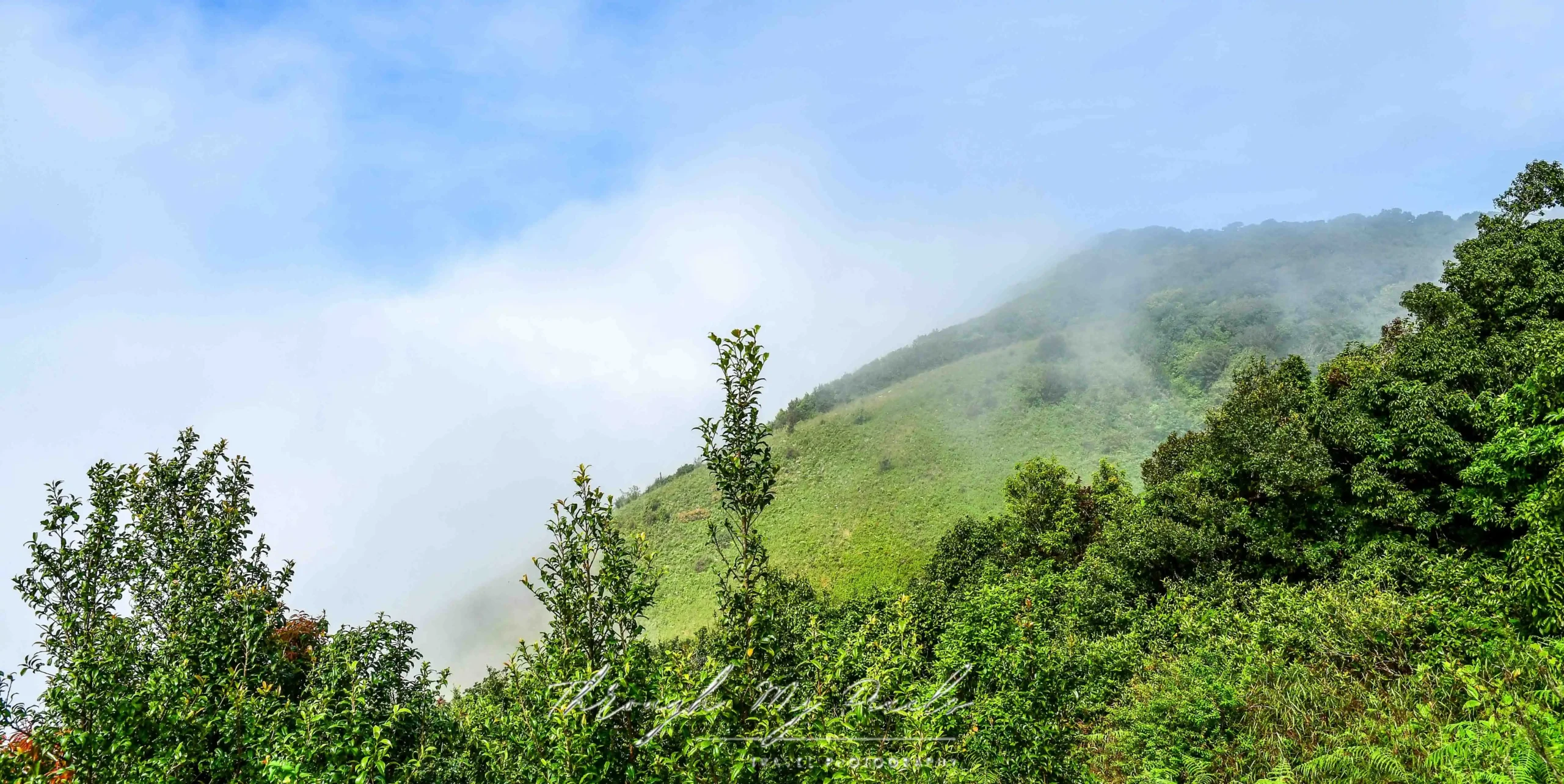
    We strolled at a leisurely pace, taking about 30 min, while pausing often to enjoy the tranquil, misty landscape of thick moss, tall trees and crisp mountain air. Certainly a relaxing walk for all ages. Just be careful if it has rained, as the boardwalk can be a bit slippery.

    Tall canopy at Ang Ka Nature Trail

    Kew Mae Pan Nature Trail

    On the other hand, the Kew Mae Pan trail is more for the adventurous. The total distance is about 3km, 10 times the length of the Ang Ka Nature Trail, with higher elevations and more rugged terrain. The journey takes about 2 to 4 hours, depending on the individual. It’s not suitable if you have mobility issues but the views make every step worth it. There’s a reason why it’s among the most popular hiking routes up here.

    Kea Mae Pan viewing point

    At 2,200m, you’ll reach one of the most iconic panoramic viewpoints in the region. On a clear day, you’ll see a sea of clouds blanketing the valleys below.

    The trail route below might give you a good idea of what to expect.

    Powered by Wikiloc

    📌 Note: The trail is closed from June to October (rainy season). You cannot venture into this area on your own – it is compulsory to hire a guide. You’ll be asked to pay 200 THB per group at the entrance and a guide from the local Hmong hill tribe will lead you on the journey.

    Do not be misled by their looks or size, though. They have been doing this for a long time and have guided many tourists on the route.

    Our guide was amazing — quick on her feet and knowledgeable. We didn’t finish the loop (we had kids and seniors waiting), but the experience was incredible. We missed the Royal Pagodas viewpoint, but it gives us a reason to return.

    Royal Pagodas at Doi Inthanon
    Photo of the Royal Pagodas from Freepik.

    Anyways, for those of you who are interested in this trail and want to feel like Frodo in the Fellowship of the Ring (we certainly felt like that with the bamboo hiking sticks), pin Doi Inthanon National Park and the Kew Mae Pan Nature Trail into your itinerary.

    Wachirathan Waterfall

    Another spot you should not miss is the Wachirathan Waterfall. While not a very tall one at 80m, it’s arguably the most popular and the most impressive at Doi Inthanon National Park. The viewing platform is just steps from the car park, and the spray from the falls is refreshing and energising! There’s a cafe nearby where you can grab a cuppa coffee and just enjoy the waterfall.

    The waterfall is definitely one of the favourite photo spots in the area. But don’t go too near else your camera equipment is going to get all wet.

    Photography tips

    • Capture people in the frame to show scale.
    • Try long exposure shots to give the water a silky effect. This is best taken with a tripod so you can keep the camera stable during the long exposures.
    • If you’re lazy like I was (no tripod), just hold your camera steady, lower the shutter speed, and experiment! This can also be done on a mobile phone. Use pro mode or manual, set shutter speed to 1-4 secs and ISO as low as possible.
    • Don’t just focus on the waterfall. Explore the surrounding areas, where the water flows,etc.
    • For the trails, capture the nature around you. The tall canopies, close-up of the moss, fungi, wildlife or little creatures if you can spot them.
    • Wide shots of panoramic views or “sea of clouds” are must-haves.

    Getting to Doi Inthanon National Park

    First, note that there is an entrance fee of 300 THB per adult for all foreigners.

    The best way to get around Chiang Mai, if you are in a big group, is to book a driver with a van. There were 13 of us so we booked 2 drivers and 2 vans for our entire trip, which makes it a lot easier for us to go wherever we want and adjust our itinerary accordingly. So getting to Doi Inthanon from our hotel at the Old City was a breeze. It’s a 2-hr journey.

    If you’re travelling solo or as a couple and if you prefer a more free and easy trip, then get a taxi to bring you up the mountain.

    There’s a lot to see and cover in Doi Inthanon which will take more than a day. In which case, consider joining day tours where you get a guide to bring you on the best spots. For instance, Klook offers a variety of them.

    Here are two options:

    1. Doi Inthanon National Park Day Tour (≈ USD 56/adult):
      Includes Wachirathan + Mae Klang Waterfalls, Karen Hill Tribe Village, Royal Pagodas, and more.
    2. Eco-Adventure Tour (≈ USD 83/adult):
      This is a new tour. A full day of guided hikes, bamboo rafting, swimming, lunch, and even tree planting! There’s also a 2-day option with overnight village stay.

    This post may contain affiliate links. If you click on them and make a purchase, I may earn a small commission at no extra cost to you. Thank you for your support!

    Klook.com

    Whether you’re a casual nature lover or a full-blown hiker, Doi Inthanon National Park has something for everyone. From mystical cloud forests to refreshing waterfalls and sky-high viewpoints, it’s a highlight of any Chiang Mai itinerary.