
Tag: lakes

  • Into the Blue: Discovering Lake Jūniko

    Into the Blue: Discovering Lake Jūniko

    If you’re visiting the UNESCO-listed Shirakami-Sanchi mountains, make sure to carve out time for Lake Jūniko (十二湖).

    Lake Jūniko was formed in 1704 when a major earthquake blocked the mountain streams. Jūniko means 12 lakes in Japanese. From the summit of Mt. Ozukure (1,458m), the Ōkuzure Observation Deck offers a panoramic view of 12 bodies of water, giving the area its name. However, the region is actually home to 33 lakes and ponds, among the most famous being the blue pond Aoike. Lake Jūniko is one of those places in Japan where you feel time slows down, and nature whispers a thousand secrets.

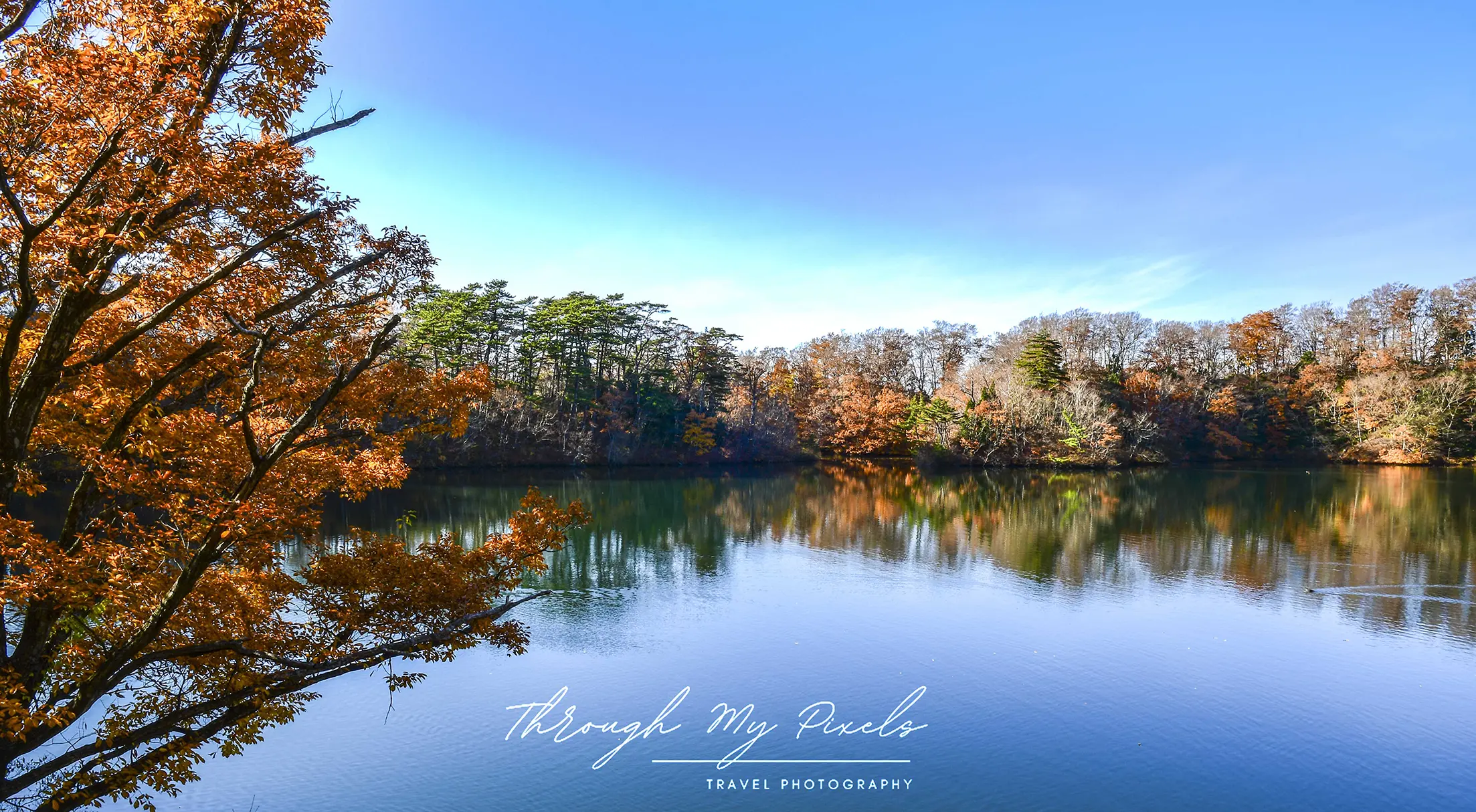
    Lake Jūniko landscape view

    The mirror lake reflections – no matter the angle, the view was just marvellous.

    Can you hear its secrets?

    We were struck by how idyllic Lake Jūniko felt – the stillness, the serenity. It had a completely different energy compared to Oirase Gorge. At Oirase Gorge, you’re guided by the constant, melodic rush of the stream at every turn. But here, at Lake Jūniko, it’s the rustling of the leaves and the gentle chorus of birdsong that accompany your steps. Both leave you hanging for more. Indeed, we could just sit there, basking in its tranquillity.

    Forest Bathing

    Forest bathing or Shinrin-yoku, is the Japanese practice of spending therapeutic time immersed in nature. A walk through the serene paths of Lake Jūniko is exactly that – a respite from the fast pace of urban life that so many of us crave for our mental well-being.

    Photograph of a sign to breathe deeply

    Treat yourself well. You’ve earned it.

    You’ve made it this far, so give yourself permission to slow down. Don’t rush.

    Listen to the chirping of the birds,

    Watch the ducks glide across the glassy blue waters,

    Breathe in the crisp, clean air.

    It’s the simplest and purest gift nature offers.

    Getting There

    From the JR Jūniko Station, you can either walk to Lake Jūniko, which takes around an hour, or grab a 15-min Kōnan bus (弘南バス) ride – Jūniko Line (十二湖線) – to the trail entrance. The bus operates between late April and November. Depending on how you want to explore the area, get off at either Ōike (王池前) or Oku Jūniko Parking (奥十二湖駐車場). You can refer to the bus schedule here.

    Hiking trails

    Its hiking trails are popular with visitors. A 40-min route starting from the souvenir shop Mori-no-Bussankan Kyororo takes visitors to Aoike, Ketoba-no-Ike Pond, lush beech forests, Wakitsubo-no-Ike Pond (沸壺の池) and Ochikuchi-no-Ike Pond (落口の池).

    Aoike (青池) is an emerald blue pond. If you’re lucky, the sun shining through the trees will make the waters of Aoike glisten even more vividly.

    Ketoba-no-Ike Pond (鶏頭場の池) is one of the largest lakes in the area. The shape of the lake is said to be in the shape of a chicken’s head – if you view it from a helicopter or a mountain lookout. Hence, the name Ketoba.

    There are also longer trails you can consider. I’ve done a simple illustration of the two routes.

    Lake Juniko trail routes

    Photography tips

    1. Chase the reflections
      The stillness of the lakes makes for perfect mirror-reflection shots. Early mornings or late afternoons are the best times to capture these.
    2. Try low, shoot wide
      Consider using a wide-angle lens if you are using a DSLR or set your mobile phone to wide mode to capture the expansiveness of the forest and its canopy or the vastness of the lakes. Try kneeling or placing your camera close to the water’s edge for a more immersive, layered shot.
    3. Focus on details
      Besides the big lake shots, zoom in on leaves floating on water, tree bark textures, or the play of light through the beech trees on the forest path. These small moments add richness to your story.
    4. Capture candid connections
      Bring your photos to life by including people interacting with the environment —friends walking along the beech path, someone pausing in awe by Aoike, or hikers immersed in conversation. These human moments add warmth and relatability.
    5. Respect the silence
      Let the mood guide your photography. The stillness and serenity of Jūniko come across best when you capture it without overediting—embrace the soft shadows and natural tones.

    This post may contain affiliate links. If you click on them and make a purchase, I may earn a small commission at no extra cost to you. Thank you for your support!

  • The ebbs and flows of Oirase Gorge and Lake Towada’s beauty

    The ebbs and flows of Oirase Gorge and Lake Towada’s beauty

    This was the reason why we wanted to come to Aomori. Once again, it was the travels of Singapore’s Mediacorp artistes Jeremy and Jessica that sparked our wanderlust – their visit to Oirase Gorge (奥入瀬渓流) on the Double J Baecation programme drew us in immediately.

    Oirase Gorge is a must-see when exploring Aomori and the Tohoku region. It is a mesmerising 14km of unspoiled natural beauty. From cascading waterfalls to mossy rocks and winding trails alongside crystal-clear streams, it’s the perfect escape away from the hustle and bustle of daily life into Japan’s serene countryside.

    Whether you’re a nature lover, photographer, or just looking to breathe in fresh air, Oirase Gorge promises an unforgettable experience.

    Our trail: From Kumoi-no-taki Falls to Lake Towada

    The entire Oirase trail stretches 14km, from Yakeyama to Nenokuchi, where Lake Towada appears in full splendour. It takes about 5 hr to walk the full trail – but like most, we started somewhere midstream, at Kumoi-no-taki Waterfall.

    Waterfall highlights:

    • Soryu Waterfall
    • Choshi Otaki Falls (the largest waterfall in the gorge)
    • Kumoi-no-taki Falls
    • Shirakinu Waterfall
    • Tamadare Waterfall

    Tip: To truly experience its beauty, stay at least for a night , like at the Hoshino Resorts Oirase Keiryu Hotel. It’s pricey but oh, so worth it.

    We began our trek at 9.30am. On paper, it is a 2-hr journey to Nenokuchi. We took a leisurely 3-hr walk with photo stops and rest stops.

    The place is massive, which would be too much to cover in a single day. This was our first experience there but we’ll be sure to return to experience the rest of it!

    Lake Towada (十和田湖, Towadako)

    Lake Towada and Oirase Gorge are part of the larger Towada Hachimantai National Park. The lake was formed by volcanic activity about 200,000 years ago and is known for its deep blue waters. To enjoy its breathless scenery, hop on a sightseeing boat to immerse yourself in the different views of the lake and its luscious mountains. There are two routes with about 5 to 6 rides each day between April to November. Unfortunately, we didn’t have time for this.

    Some photography tips

    • Go early:
      I like to work with natural light. Mornings are good as the sun isn’t too hot and the light is not so harsh. If you are willing to sacrifice sleep to rise up early, daybreaks are nice as they make for colourful skies. Early mornings are also a good time to capture light rays peeking through the forest foliage.
    • Bring a tripod (if you can):
      Oirase Gorge is famous for its flowing streams and waterfalls. A tripod helps you capture that silky water effect with slower shutter speeds. Even a mini tripod works if you prefer to travel light! Or if you have sturdy hands, you could still attempt to shoot a few seconds of long exposure.
    • Mind your footing:
      Trails are easy to follow but can be slippery or rocky in places and some run close to the stream. Wear good walking shoes and take your time.
    • Experiment with angles:
      Instead of shooting everything straight on, try low angles, near the stream or frame your shots through tree branches. Go wide to also capture the expansive woods and the grandeur of towering trees, or the vastness of Lake Towada.
    • Capture the details:
      Besides the big waterfalls, don’t forget the little scenes — mossy rocks, colourful maple leaves, winding streams. Sometimes the small moments tell the best stories.
    • Golden hour
      If you can stay till sunset, the colours over Lake Towada are breathtaking. The warm light adds a soft glow to everything — perfect for dreamy landscapes.
    • Watch your time and enjoy:
      It’s easy to get caught up and forget about time sometimes. As Oirase Gorge is huge, do keep track of time and where you are. Take note of the bus schedule and its pick-up locations so that you can catch a ride back. Buses are not very frequent if they are off-season. Walking back could take another 2 hr or more, depending on how much ground you need to cover. We would know because we missed the bus. But luckily, we met a very kind restaurant owner at Lake Towada who helped us to call for a cab and even luckier when a Taiwanese couple who stayed at the same hotel spotted us and asked to share the ride with us. Cabs are expensive in Japan, you see.

    Scan this QR code which gives a very good illustration of the Oirase Gorge walking trail, featuring the various highlights along the way and the walking time required.

    Image source: JNTO

    🌿 Remember: There’s no “perfect” shot. It’s about capturing how the place makes you feel.


    Here’s the Double J Baecation episode if you are interested to see Oirase Gorge through their eyes.

    There’s a sense of peace and tranquillity at Oirase Gorge and Lake Towada that’s hard to put into words — it’s in the whisper of the stream, the golden dance of autumn leaves, and the reflections on a still lake.

    If you’re planning a trip to Tohoku, don’t miss this little slice of paradise.

    This post may contain affiliate links. If you click on them and make a purchase, I may earn a small commission at no extra cost to you. Thank you for your support!