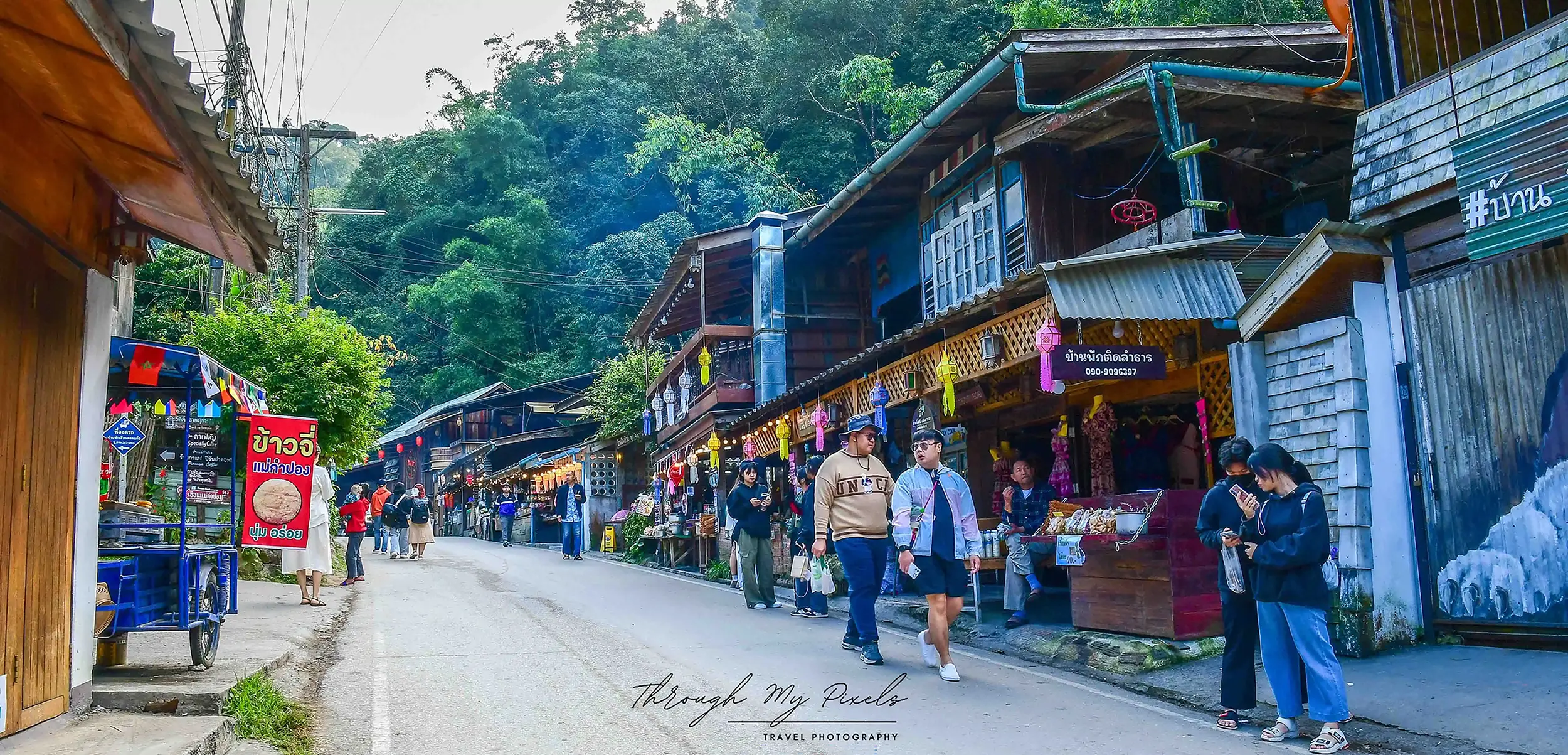
Mae Rim offers a different vibe from Doi Inthanon National Park and Mae Kampong.
A little north of the Doi Suthep mountains, Mae Rim is known for its gorgeous mountain views, natural attractions, and a slower pace of life. Up here, you’ll find everything from flower farms and cafes to glamping resorts tucked into the hills. The region is also home to the indigenous Hmong people, adding cultural depth to the natural beauty of the place.


I think young couples and newlyweds can consider spending a night glamping here. Waking up to the sounds of birds, catching the sunrise and enjoying a breathtaking view of the mountains and valleys. It certainly makes for a romantic getaway!
But alas, we were travelling with a big group of seniors and children, so glamping was out of the question. But hey, Mae Rim still has lots to offer!
Where is Mae Rim?
Mae Rim is just 25km to 30km away from Chiang Mai’s Old City, making it much closer than Doi Inthanon and Mae Kampong. As you can tell by now, the Old City tends to be the base, where many do their day trips from.
Once again, I would advise booking a private hire car or van if you are not driving. Or consider joining a small group tour. The ride up is rather winding but scenic.
There are lots to see at Mae Rim. The Mon Jam area is where you will find many farms and flower gardens. The Queen Sirikit Botianic Garden is also a highlight with canopy trails, glasshouses with tropical plants and forested walking paths. There’s also the Mae Sa Waterfall, which is a very popular spot with the locals and makes for a nice stop for a picnic or a short hike. Taking advantage of its scenic location, there are also many lovely cafes with outdoor seating to chill and enjoy nature’s gift.
So, where do we start? We couldn’t cover everything, but here’s what we managed to visit:
I’ve plotted the locations in Google Maps below, including the directions for easy reference. The ride from the Old City to Pang Hwa Flower Garden takes about 50min to an hour.
Mon Jam
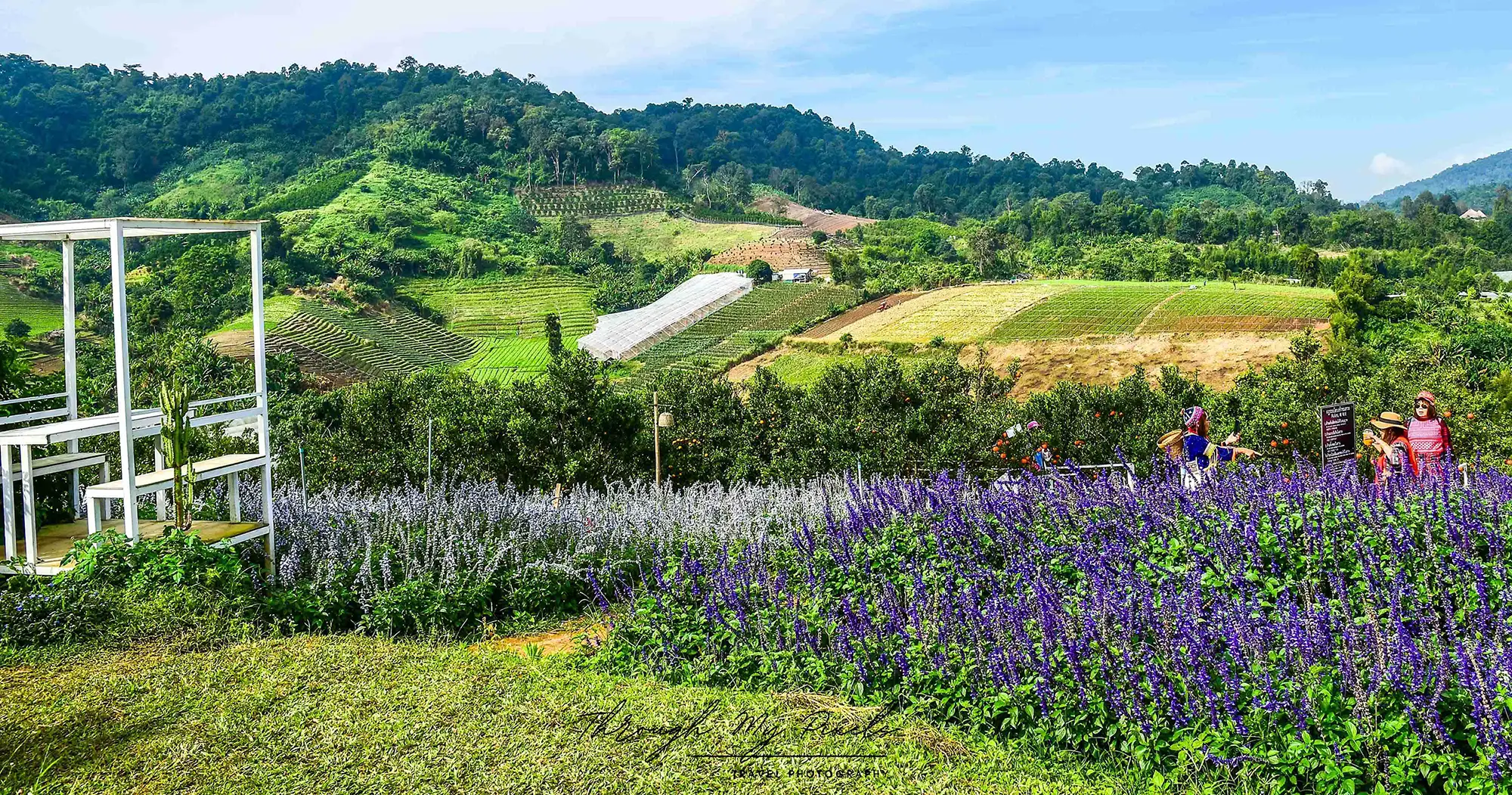
A highlight of the Mae Rim district is Mon Jam (also spelled Mon Cham). This beautiful mountaintop area at 1,300m above sea level is known for its cool weather, panoramic views and agricultural projects.
On a clear day, you’ll see layers of misty hills, green terraced farms and a sky that… seems to go on forever.
Once a quiet Hmong village, Mon Jam began transforming into a travel destination thanks to the Royal Project Foundation, which helped locals shift from slash-and-burn farming to sustainable agriculture. Today, you’ll see farms growing strawberries, cabbages, herbs, and flowers, as well as small local cafes, food stalls, and homestays scattered along the hillside. The area also has skywalks, zip-lines, and ATVs for those looking for a bit of light adventure.


Mon Jam is also where you will find glamping resorts. There are more than 20 glamping sites. Homestays are also available if you want to experience staying with the locals.
This post may contain affiliate links. If you click on them and make a purchase, I may earn a small commission at no extra cost to you. Thank you for your support!
Pang Hwa Flower Garden
This wasn’t on our original itinerary. We had planned to visit Jin Ju Orange Farm but it was closed — so our driver suggested Pang Hwa Flower Garden instead. And OMG, what a great suggestion it was!

Did you know that there are reportedly 13 or more flower farms in Mae Rim, particularly around Mon Jam. For flower lovers, it’s an absolute paradise. That said, I don’t think you need to cover them all — even if you love blooms. And it also depends on when you visit.
Pang Hwa is an Instagrammer’s dream: colourful flower beds, rolling hills, a mountain-top setting close to the clouds. There’s a lavender garden and an orange orchard where you can also pick oranges. So we didn’t miss Jin Ju Orange Farm too much!
There’s also a cafe here — perfect for soaking in the views with a hot drink in hand.
- Open daily: 7am – 6pm
- Entry fee: 100 THB (foreigners)
- Orange-picking: 80 THB/kg


Ying Yong Flower Garden
Located in the Mon Jam area, the garden spans 16 acres and showcases a stunning variety of flowers like lavender, marigolds and sunflowers, set against a backdrop of blue skies and emerald green mountains.
Yes, I’m going to say it again: Instagrammable. And truly, it is.
They’ve done a great job of accentuating the natural beauty with walking trails and scenic viewing spots. One of the highlights here is an elevated boardwalk that stretches across the fields, offering sweeping panoramic views of Mon Jam.
Currently, Pelago has a private tour which includes visiting Ying Yong and Pang Hwa gardens, along with a homestay lunch — a great way to experience local hospitality. There is also a short day tour which includes Mon Jam and Huay Tueng Thao Reservoir and Sculpture Park (quite a fun place with King Kong sculptures, sheep farm and others that should be fun for young children).
Honestly, words don’t quite do it justice. So I’ll let the pictures do the talking.


The best time to visit is between November to February when flowers are in full bloom and the weather is cool. But of course, there are other flowers to see in other times of the year, like sunflowers from March to May, margarets from June to August and marigolds from September to October.
Whatever the time of the year you wish to go, just be warned, you won’t want to leave.
- Open daily: 6am – 6pm
- Entry fee: 100THB (foreigners-adult), 50THB (foreigners-child <10 years old)
Skywalk Flower Farm
By the time we arrived at Skywalk Flower Farm, the kids had pretty much hit their limit for flower appreciation. (Can’t blame them — after a full day of blooms, even the most patient little legs will start protesting.) But for us adults, this is a place you won’t want to miss.
Similar to Ying Yong Flower Garden, there’s also an elevated boardwalk — but the view here hits differently. It overlooks a sheep farm, rolling valleys and offers yet another perspective of Mae Rim’s mountainous landscape.


One standout feature here is a palm-shaped platform, perched dramatically over the hillside. Ready to feel on top of the world? Climb the steps — though be warned, there are no railings — and strike your poses. The view from the top is incredible and definitely one for the ‘Gram. Just don’t look down if you’re not a fan of heights! I tried… and I remember feeling weak in the knees!
Nearby, there’s also a cosy cafe where you can relax, sip a latte and just gaze at the scenery.
- Open daily: 7am – 8pm
- Entry fee: 40THB (adults), 20THB (child)
Want a sneak peek before you visit? Check out this beautifully shot video by Beyond — it captures the essence of Skywalk Farm perfectly.