Tag: nature

  • Be enchanted, with Mae Rim

    Be enchanted, with Mae Rim

    Mae Rim offers a different vibe from Doi Inthanon National Park and Mae Kampong.

    A little north of the Doi Suthep mountains, Mae Rim is known for its gorgeous mountain views, natural attractions, and a slower pace of life. Up here, you’ll find everything from flower farms and cafes to glamping resorts tucked into the hills. The region is also home to the indigenous Hmong people, adding cultural depth to the natural beauty of the place.

    Mae Rim
    Dried chilli
    Chiang Mai locals
    Chiang Mai locals

    I think young couples and newlyweds can consider spending a night glamping here. Waking up to the sounds of birds, catching the sunrise and enjoying a breathtaking view of the mountains and valleys. It certainly makes for a romantic getaway!

    But alas, we were travelling with a big group of seniors and children, so glamping was out of the question. But hey, Mae Rim still has lots to offer!

    Where is Mae Rim?

    Mae Rim is just 25km to 30km away from Chiang Mai’s Old City, making it much closer than Doi Inthanon and Mae Kampong. As you can tell by now, the Old City tends to be the base, where many do their day trips from.

    Once again, I would advise booking a private hire car or van if you are not driving. Or consider joining a small group tour. The ride up is rather winding but scenic.

    There are lots to see at Mae Rim. The Mon Jam area is where you will find many farms and flower gardens. The Queen Sirikit Botianic Garden is also a highlight with canopy trails, glasshouses with tropical plants and forested walking paths. There’s also the Mae Sa Waterfall, which is a very popular spot with the locals and makes for a nice stop for a picnic or a short hike. Taking advantage of its scenic location, there are also many lovely cafes with outdoor seating to chill and enjoy nature’s gift.

    So, where do we start? We couldn’t cover everything, but here’s what we managed to visit:

    I’ve plotted the locations in Google Maps below, including the directions for easy reference. The ride from the Old City to Pang Hwa Flower Garden takes about 50min to an hour.

    Mon Jam

    A highlight of the Mae Rim district is Mon Jam (also spelled Mon Cham). This beautiful mountaintop area at 1,300m above sea level is known for its cool weather, panoramic views and agricultural projects.

    On a clear day, you’ll see layers of misty hills, green terraced farms and a sky that… seems to go on forever.

    Once a quiet Hmong village, Mon Jam began transforming into a travel destination thanks to the Royal Project Foundation, which helped locals shift from slash-and-burn farming to sustainable agriculture. Today, you’ll see farms growing strawberries, cabbages, herbs, and flowers, as well as small local cafes, food stalls, and homestays scattered along the hillside. The area also has skywalks, zip-lines, and ATVs for those looking for a bit of light adventure.

    Mon Jam glamping and homestays
    Mon Jam glamping resorts

    Mon Jam is also where you will find glamping resorts. There are more than 20 glamping sites. Homestays are also available if you want to experience staying with the locals.

    This post may contain affiliate links. If you click on them and make a purchase, I may earn a small commission at no extra cost to you. Thank you for your support!

    Pang Hwa Flower Garden

    This wasn’t on our original itinerary. We had planned to visit Jin Ju Orange Farm but it was closed — so our driver suggested Pang Hwa Flower Garden instead. And OMG, what a great suggestion it was!

    Tourist admiring Mae Rim

    Did you know that there are reportedly 13 or more flower farms in Mae Rim, particularly around Mon Jam. For flower lovers, it’s an absolute paradise. That said, I don’t think you need to cover them all — even if you love blooms. And it also depends on when you visit.

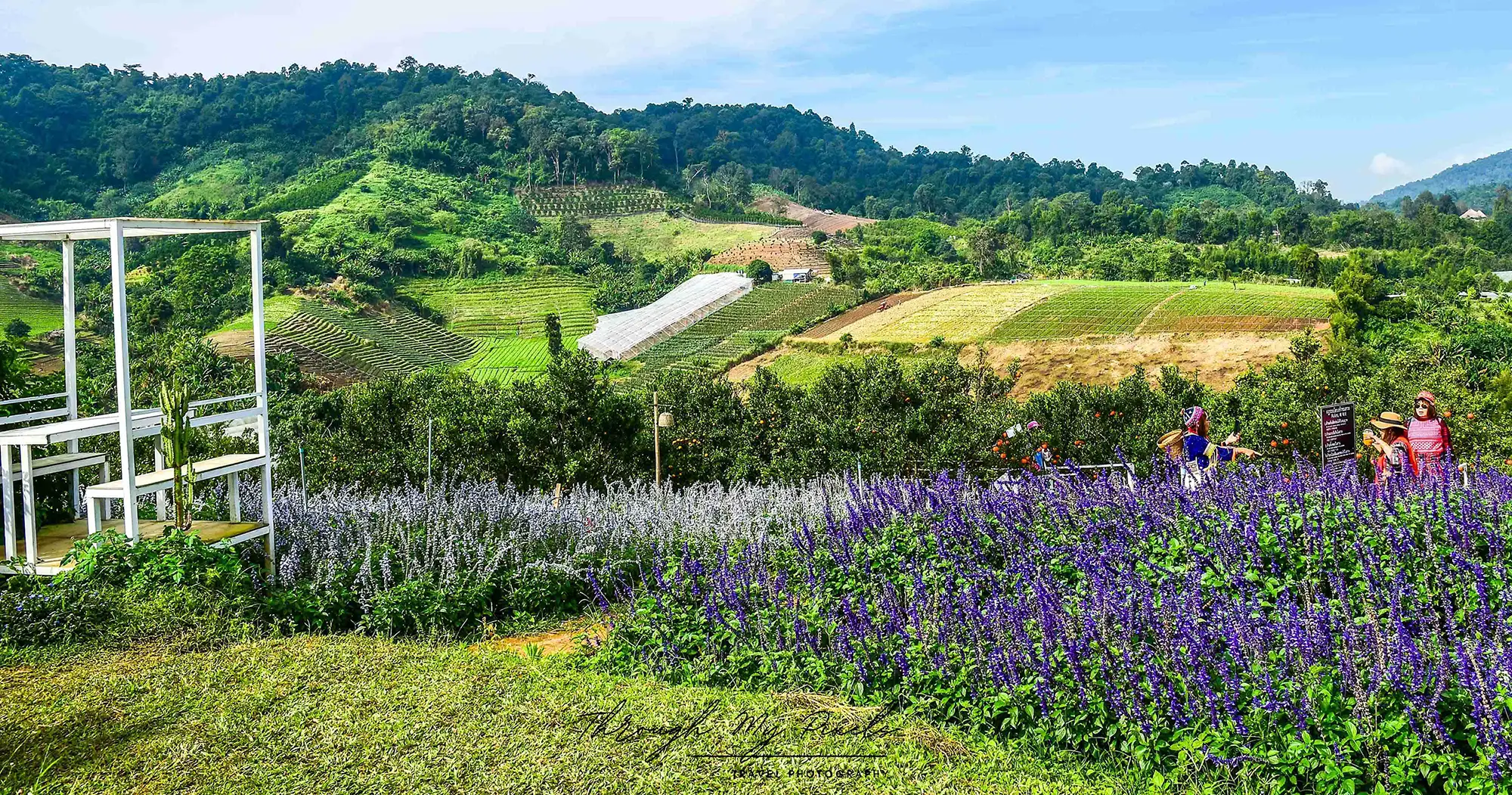
    Pang Hwa is an Instagrammer’s dream: colourful flower beds, rolling hills, a mountain-top setting close to the clouds. There’s a lavender garden and an orange orchard where you can also pick oranges. So we didn’t miss Jin Ju Orange Farm too much!

    There’s also a cafe here — perfect for soaking in the views with a hot drink in hand.

    • Open daily: 7am – 6pm
    • Entry fee: 100 THB (foreigners)
    • Orange-picking: 80 THB/kg

    Ying Yong Flower Garden

    Located in the Mon Jam area, the garden spans 16 acres and showcases a stunning variety of flowers like lavender, marigolds and sunflowers, set against a backdrop of blue skies and emerald green mountains.

    Yes, I’m going to say it again: Instagrammable. And truly, it is.

    They’ve done a great job of accentuating the natural beauty with walking trails and scenic viewing spots. One of the highlights here is an elevated boardwalk that stretches across the fields, offering sweeping panoramic views of Mon Jam.

    Currently, Pelago has a private tour which includes visiting Ying Yong and Pang Hwa gardens, along with a homestay lunch — a great way to experience local hospitality. There is also a short day tour which includes Mon Jam and Huay Tueng Thao Reservoir and Sculpture Park (quite a fun place with King Kong sculptures, sheep farm and others that should be fun for young children).

    Honestly, words don’t quite do it justice. So I’ll let the pictures do the talking.

    The best time to visit is between November to February when flowers are in full bloom and the weather is cool. But of course, there are other flowers to see in other times of the year, like sunflowers from March to May, margarets from June to August and marigolds from September to October.

    Whatever the time of the year you wish to go, just be warned, you won’t want to leave.

    • Open daily: 6am – 6pm
    • Entry fee: 100THB (foreigners-adult), 50THB (foreigners-child <10 years old)

    Skywalk Flower Farm

    By the time we arrived at Skywalk Flower Farm, the kids had pretty much hit their limit for flower appreciation. (Can’t blame them — after a full day of blooms, even the most patient little legs will start protesting.) But for us adults, this is a place you won’t want to miss.

    Similar to Ying Yong Flower Garden, there’s also an elevated boardwalk — but the view here hits differently. It overlooks a sheep farm, rolling valleys and offers yet another perspective of Mae Rim’s mountainous landscape.

    One standout feature here is a palm-shaped platform, perched dramatically over the hillside. Ready to feel on top of the world? Climb the steps — though be warned, there are no railings — and strike your poses. The view from the top is incredible and definitely one for the ‘Gram. Just don’t look down if you’re not a fan of heights! I tried… and I remember feeling weak in the knees!

    Nearby, there’s also a cosy cafe where you can relax, sip a latte and just gaze at the scenery.

    • Open daily: 7am – 8pm
    • Entry fee: 40THB (adults), 20THB (child)

    Want a sneak peek before you visit? Check out this beautifully shot video by Beyond — it captures the essence of Skywalk Farm perfectly.
  • At the roof of Thailand ~       Doi Inthanon National Park

    At the roof of Thailand ~ Doi Inthanon National Park

    Chiang Mai, 28 November 2024 – this was my first visit to Thailand’s charming northern city. When the idea of a holiday trip in Chiang Mai first came up, my mind was filled with images of beautiful temples, elephant performances, sizzling street food and relaxing Thai massages. That’s probably what comes to mind to most people — especially if they’ve never been there and only know it from guidebooks or travel shows. I wondered if there would be something more of the outdoors, you know, like nature walks, healthy trekking?

    Illustrated map of Thailand

    In my research, I found that one of the top recommended things to do in Chiang Mai is to explore its natural beauty.

    Chiang Mai is a mountainous region, surrounded by forested hills and highlands of northern Thailand. Its city lies in a valley and it’s a short drive to scenic mountain areas like Doi Suthep-Pui and Doi Inthanon, known as Thailand’s highest peak at 2,565m above sea level. This gives Chiang Mai its cooler climate, suitable for trekking, waterfall hikes, and nature-based tourism. And November is an ideal time to go!

    So, the national parks of Doi Inthanon and Doi Suthep-Pui made it into my itinerary. First stop, Doi Inthanon.

    Did you know that it’s part of the Himalayan mountain range? I suppose I can now say I climbed the Himalayas! 😄

    When we visited, the temperature ranged from a high of 12°C to a low of 6°C. Well, it’s not exactly Himalayan cold — but still so Shiok! (In Singapore English, “Shiok” means very enjoyable or satisfying.)

    Where Is Doi Inthanon?

    The national park is located about 70km southwest of Chiang Mai’s Old City. It’s one of the most popular day trips.

    According to the Thai National Parks, the park honours King Inthawichayanon, who was dedicated to preserving the northern forests. Nicknamed “The Roof of Thailand”, Doi Inthanon is a haven for bird watchers, with over 360 species recorded and home to some of Thailand’s most spectacular waterfalls, including:

    There are trails for all levels, from easy boardwalks to moderately challenging treks, such as the Ang Ka Nature Trail and the Kew Mae Pan Nature Trail.

    Ang Ka Nature Trail

    If climbing isn’t your thing — as was the case for our group, which included several seniors — the Ang Ka Nature Trail is a very doable one. Even at a height of 2,500m above sea level, the trail is easy and scenic.

    Moss at Ang Ka Nature Trail

    It’s a short 360m loop on a well-maintained wooden boardwalk and concrete steps. It winds through a temperate evergreen forest, home to rare plants like Rhododendron, Sphagnum Moss and Ferns. Wildlife such as the Common European White-toothed Shrew, Pere David’s Vole and Green-tailed Sunbird have also been spotted here.

    We strolled at a leisurely pace, taking about 30 min, while pausing often to enjoy the tranquil, misty landscape of thick moss, tall trees and crisp mountain air. Certainly a relaxing walk for all ages. Just be careful if it has rained, as the boardwalk can be a bit slippery.

    Tall canopy at Ang Ka Nature Trail

    Kew Mae Pan Nature Trail

    On the other hand, the Kew Mae Pan trail is more for the adventurous. The total distance is about 3km, 10 times the length of the Ang Ka Nature Trail, with higher elevations and more rugged terrain. The journey takes about 2 to 4 hours, depending on the individual. It’s not suitable if you have mobility issues but the views make every step worth it. There’s a reason why it’s among the most popular hiking routes up here.

    Kea Mae Pan viewing point

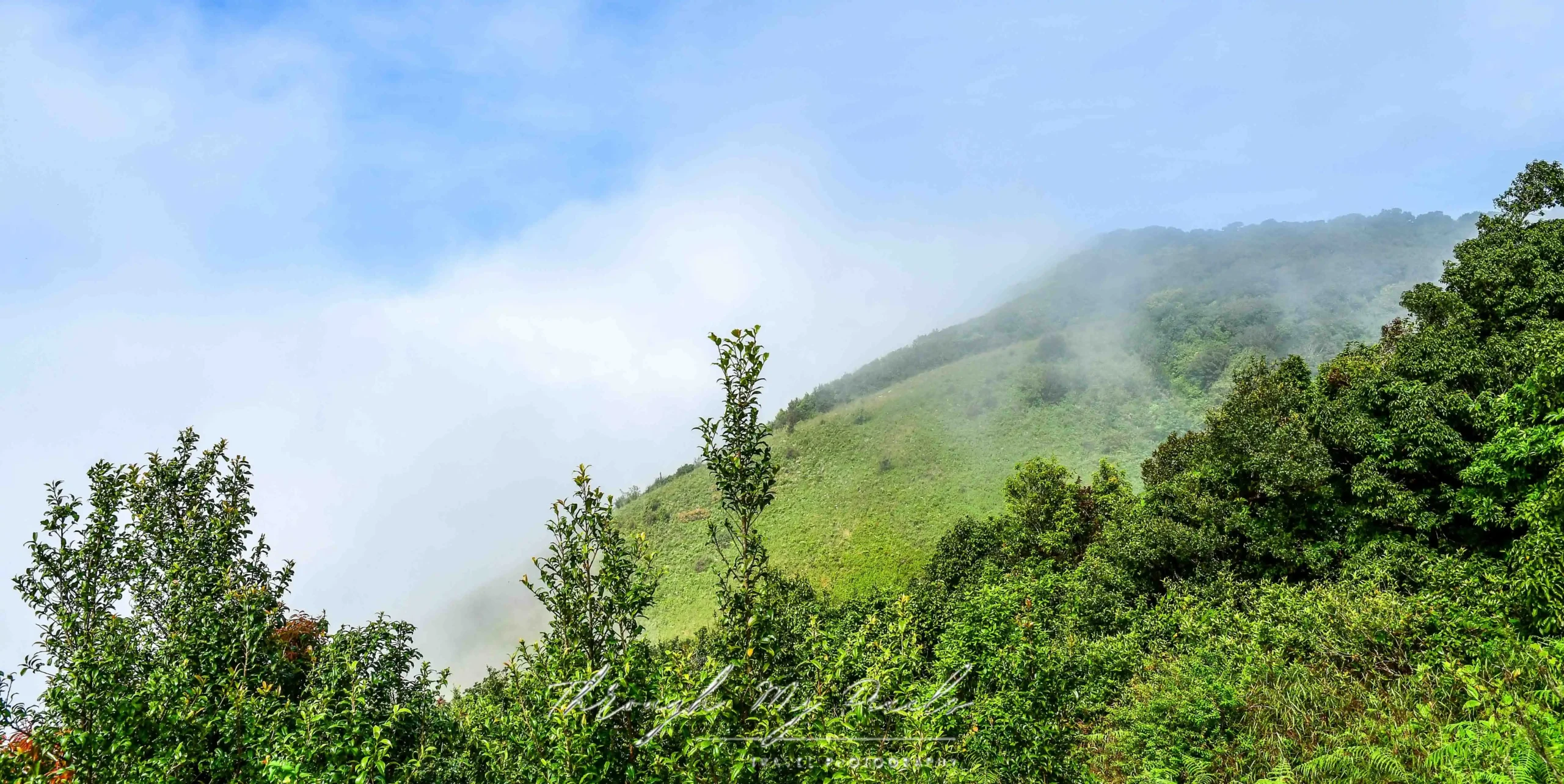
    At 2,200m, you’ll reach one of the most iconic panoramic viewpoints in the region. On a clear day, you’ll see a sea of clouds blanketing the valleys below.

    The trail route below might give you a good idea of what to expect.

    Powered by Wikiloc

    📌 Note: The trail is closed from June to October (rainy season). You cannot venture into this area on your own – it is compulsory to hire a guide. You’ll be asked to pay 200 THB per group at the entrance and a guide from the local Hmong hill tribe will lead you on the journey.

    Do not be misled by their looks or size, though. They have been doing this for a long time and have guided many tourists on the route.

    Our guide was amazing — quick on her feet and knowledgeable. We didn’t finish the loop (we had kids and seniors waiting), but the experience was incredible. We missed the Royal Pagodas viewpoint, but it gives us a reason to return.

    Royal Pagodas at Doi Inthanon
    Photo of the Royal Pagodas from Freepik.

    Anyways, for those of you who are interested in this trail and want to feel like Frodo in the Fellowship of the Ring (we certainly felt like that with the bamboo hiking sticks), pin Doi Inthanon National Park and the Kew Mae Pan Nature Trail into your itinerary.

    Wachirathan Waterfall

    Another spot you should not miss is the Wachirathan Waterfall. While not a very tall one at 80m, it’s arguably the most popular and the most impressive at Doi Inthanon National Park. The viewing platform is just steps from the car park, and the spray from the falls is refreshing and energising! There’s a cafe nearby where you can grab a cuppa coffee and just enjoy the waterfall.

    The waterfall is definitely one of the favourite photo spots in the area. But don’t go too near else your camera equipment is going to get all wet.

    Photography tips

    • Capture people in the frame to show scale.
    • Try long exposure shots to give the water a silky effect. This is best taken with a tripod so you can keep the camera stable during the long exposures.
    • If you’re lazy like I was (no tripod), just hold your camera steady, lower the shutter speed, and experiment! This can also be done on a mobile phone. Use pro mode or manual, set shutter speed to 1-4 secs and ISO as low as possible.
    • Don’t just focus on the waterfall. Explore the surrounding areas, where the water flows,etc.
    • For the trails, capture the nature around you. The tall canopies, close-up of the moss, fungi, wildlife or little creatures if you can spot them.
    • Wide shots of panoramic views or “sea of clouds” are must-haves.

    Getting to Doi Inthanon National Park

    First, note that there is an entrance fee of 300 THB per adult for all foreigners.

    The best way to get around Chiang Mai, if you are in a big group, is to book a driver with a van. There were 13 of us so we booked 2 drivers and 2 vans for our entire trip, which makes it a lot easier for us to go wherever we want and adjust our itinerary accordingly. So getting to Doi Inthanon from our hotel at the Old City was a breeze. It’s a 2-hr journey.

    If you’re travelling solo or as a couple and if you prefer a more free and easy trip, then get a taxi to bring you up the mountain.

    There’s a lot to see and cover in Doi Inthanon which will take more than a day. In which case, consider joining day tours where you get a guide to bring you on the best spots. For instance, Klook offers a variety of them.

    Here are two options:

    1. Doi Inthanon National Park Day Tour (≈ USD 56/adult):
      Includes Wachirathan + Mae Klang Waterfalls, Karen Hill Tribe Village, Royal Pagodas, and more.
    2. Eco-Adventure Tour (≈ USD 83/adult):
      This is a new tour. A full day of guided hikes, bamboo rafting, swimming, lunch, and even tree planting! There’s also a 2-day option with overnight village stay.

    This post may contain affiliate links. If you click on them and make a purchase, I may earn a small commission at no extra cost to you. Thank you for your support!

    Klook.com

    Whether you’re a casual nature lover or a full-blown hiker, Doi Inthanon National Park has something for everyone. From mystical cloud forests to refreshing waterfalls and sky-high viewpoints, it’s a highlight of any Chiang Mai itinerary.

  • Into the Blue: Discovering Lake Jūniko

    Into the Blue: Discovering Lake Jūniko

    If you’re visiting the UNESCO-listed Shirakami-Sanchi mountains, make sure to carve out time for Lake Jūniko (十二湖).

    Lake Jūniko was formed in 1704 when a major earthquake blocked the mountain streams. Jūniko means 12 lakes in Japanese. From the summit of Mt. Ozukure (1,458m), the Ōkuzure Observation Deck offers a panoramic view of 12 bodies of water, giving the area its name. However, the region is actually home to 33 lakes and ponds, among the most famous being the blue pond Aoike. Lake Jūniko is one of those places in Japan where you feel time slows down, and nature whispers a thousand secrets.

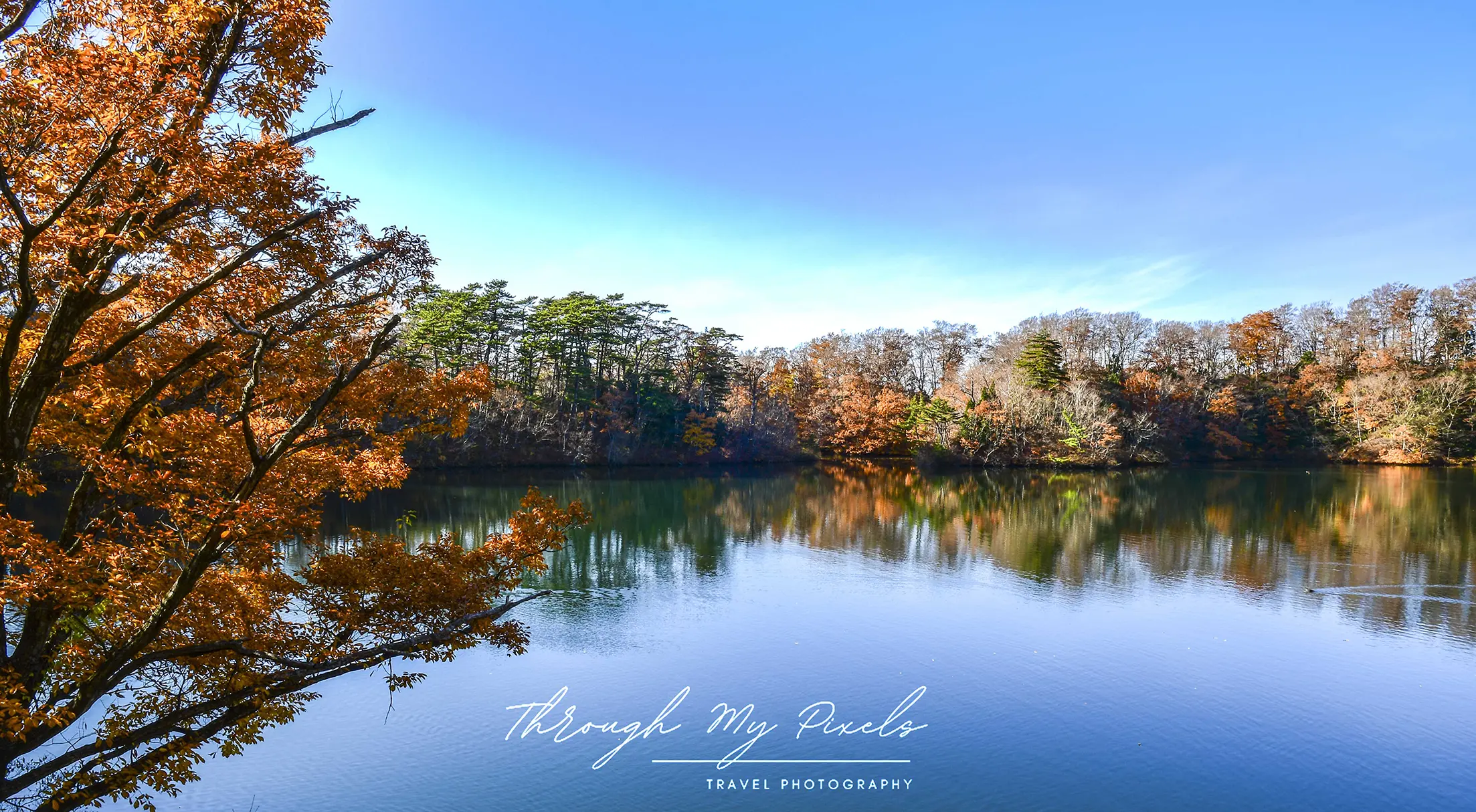
    Lake Jūniko landscape view

    The mirror lake reflections – no matter the angle, the view was just marvellous.

    Can you hear its secrets?

    We were struck by how idyllic Lake Jūniko felt – the stillness, the serenity. It had a completely different energy compared to Oirase Gorge. At Oirase Gorge, you’re guided by the constant, melodic rush of the stream at every turn. But here, at Lake Jūniko, it’s the rustling of the leaves and the gentle chorus of birdsong that accompany your steps. Both leave you hanging for more. Indeed, we could just sit there, basking in its tranquillity.

    Forest Bathing

    Forest bathing or Shinrin-yoku, is the Japanese practice of spending therapeutic time immersed in nature. A walk through the serene paths of Lake Jūniko is exactly that – a respite from the fast pace of urban life that so many of us crave for our mental well-being.

    Photograph of a sign to breathe deeply

    Treat yourself well. You’ve earned it.

    You’ve made it this far, so give yourself permission to slow down. Don’t rush.

    Listen to the chirping of the birds,

    Watch the ducks glide across the glassy blue waters,

    Breathe in the crisp, clean air.

    It’s the simplest and purest gift nature offers.

    Getting There

    From the JR Jūniko Station, you can either walk to Lake Jūniko, which takes around an hour, or grab a 15-min Kōnan bus (弘南バス) ride – Jūniko Line (十二湖線) – to the trail entrance. The bus operates between late April and November. Depending on how you want to explore the area, get off at either Ōike (王池前) or Oku Jūniko Parking (奥十二湖駐車場). You can refer to the bus schedule here.

    Hiking trails

    Its hiking trails are popular with visitors. A 40-min route starting from the souvenir shop Mori-no-Bussankan Kyororo takes visitors to Aoike, Ketoba-no-Ike Pond, lush beech forests, Wakitsubo-no-Ike Pond (沸壺の池) and Ochikuchi-no-Ike Pond (落口の池).

    Aoike (青池) is an emerald blue pond. If you’re lucky, the sun shining through the trees will make the waters of Aoike glisten even more vividly.

    Ketoba-no-Ike Pond (鶏頭場の池) is one of the largest lakes in the area. The shape of the lake is said to be in the shape of a chicken’s head – if you view it from a helicopter or a mountain lookout. Hence, the name Ketoba.

    There are also longer trails you can consider. I’ve done a simple illustration of the two routes.

    Lake Juniko trail routes

    Photography tips

    1. Chase the reflections
      The stillness of the lakes makes for perfect mirror-reflection shots. Early mornings or late afternoons are the best times to capture these.
    2. Try low, shoot wide
      Consider using a wide-angle lens if you are using a DSLR or set your mobile phone to wide mode to capture the expansiveness of the forest and its canopy or the vastness of the lakes. Try kneeling or placing your camera close to the water’s edge for a more immersive, layered shot.
    3. Focus on details
      Besides the big lake shots, zoom in on leaves floating on water, tree bark textures, or the play of light through the beech trees on the forest path. These small moments add richness to your story.
    4. Capture candid connections
      Bring your photos to life by including people interacting with the environment —friends walking along the beech path, someone pausing in awe by Aoike, or hikers immersed in conversation. These human moments add warmth and relatability.
    5. Respect the silence
      Let the mood guide your photography. The stillness and serenity of Jūniko come across best when you capture it without overediting—embrace the soft shadows and natural tones.

    This post may contain affiliate links. If you click on them and make a purchase, I may earn a small commission at no extra cost to you. Thank you for your support!

  • A serene stay at Hoshino Resorts Oirase Keiryu Hotel

    A serene stay at Hoshino Resorts Oirase Keiryu Hotel

    A trip to Oirase Gorge wouldn’t feel complete without staying at least one night at the Hoshino Resorts Oirase Keiryu Hotel. It’s the only accommodation located along the Oirase stream – perfect for fully immersing yourself in Oirase’s natural beauty. Nestled within the gorge, you can experience the lush forests and the gentle rush of the Oirase stream right at its doorsteps. It certainly makes for a great anniversary stay!

    The hotel is part of an award-winning and very well-known luxury hot spring and resort ryokan brand in Japan. You can tell from the above photo of its grand lobby to get a sense of how lux this establishment is. Rooms at this hotel are designed to blend beautifully with the surrounding nature. Large windows overlook the mountain stream. Some premium rooms even have private balconies with an outdoor bath where you can relax and listen to the water flowing by. Alas, I can only dream…

    Window view from Hoshino Resorts Oirase Keiryu Hotel
    Our window view from the room!

    Our stay

    We stayed in the Superior Room, a spacious 44㎡ room (huge by Japan’s standards) with twin beds, a bathroom and a sofa where we could sit and enjoy the gorgeous mountain view. Here’s a view of the room we stayed at.

    We booked the dinner and breakfast package and it did not disappoint. The buffet-style dining at the Aomori Ringo Kitchen featured some of Aomori’s finest produce – fresh seafood, seasonal vegetables, and hearty northern dishes. And of course, the hotel’s big onsen was such a luxury!

    Getting there (and out)

    We took the resort’s shuttle bus from JR Hachinohe station. The hotel offers direct shuttles only from JR Hachinohe Station or Aomori Station (or its sister property, Aomoriya).

    Important: Shuttle reservations are required, and they do fill up — so be sure to book early! I’d advise you to book early. Check here for the various options and timings.

    The resort shuttle for the return journey typically leaves in the morning (around 10–11am), which limits your time for exploring Oirase Gorge if you’re only staying one night.

    Our suggestion:

    • Take the shuttle in.
    • Skip the shuttle out — instead, hop on a JR bus back to JR Hachinohe Station (approx. 1hr 45min). You can check the schedule here.
    • Take note of the timing for the last bus so you don’t miss it. Also, some stops are not in operation during the late autumn or winter season.
    Shuttle bus directions
    • Alternatively, you can manage your own time and pace if you’re renting a car. Check out Klook for car rental deals.

    Here’s a sneak preview of what you get to experience at Hoshino Resorts Oirase Keiryu Hotel.

    Suggested itinerary

    Here’s a simple plan if you’re staying one night:

    Day 1

    • Arrive by shuttle and check in.
    • Go for a short walk to explore the nearby surroundings (ideally before sunset at ~4pm in autumn).
    • Soak in the onsen with hot spring waters from Mt Hakkoda. Try the outdoor bath for a magical experience under the crisp mountain air.
    • Enjoy the scrumptious dinner at Aomori Ringo Kitchen — definitely worth booking in advance!
    • Explore the resort’s charming interiors and cosy atmosphere.

    Day 2

    • Wake up early and head out to explore more of Oirase Gorge.
    • Not keen on walking? You can book a seat on the open-top sightseeing bus (3,850yen/pax). It runs round-trips to Lake Towada, with two daily departures — but only operates between May to early November (we missed it, unfortunately).
    • If you are staying for more than a night, consider signing up for other activities like moss ball making workshop, Oirase Lamp making workshop, guided walks (in Japanese) and afternoon tea by the river.

    You really can’t go too far wrong with Hoshino Resorts and Oirase Gorge. For us, it was a great way to celebrate our anniversary and a memorable time spent. Will you give this a try?

    This post may contain affiliate links. If you click on them and make a purchase, I may earn a small commission at no extra cost to you. Thank you for your support!

    (P.S. Here’s the resort’s video clip of the open-top bus ride — a great way to get a preview!)

    Book quality hotels and ryokans in Japan at Rakuten Travel

  • The ebbs and flows of Oirase Gorge and Lake Towada’s beauty

    The ebbs and flows of Oirase Gorge and Lake Towada’s beauty

    This was the reason why we wanted to come to Aomori. Once again, it was the travels of Singapore’s Mediacorp artistes Jeremy and Jessica that sparked our wanderlust – their visit to Oirase Gorge (奥入瀬渓流) on the Double J Baecation programme drew us in immediately.

    Oirase Gorge is a must-see when exploring Aomori and the Tohoku region. It is a mesmerising 14km of unspoiled natural beauty. From cascading waterfalls to mossy rocks and winding trails alongside crystal-clear streams, it’s the perfect escape away from the hustle and bustle of daily life into Japan’s serene countryside.

    Whether you’re a nature lover, photographer, or just looking to breathe in fresh air, Oirase Gorge promises an unforgettable experience.

    Our trail: From Kumoi-no-taki Falls to Lake Towada

    The entire Oirase trail stretches 14km, from Yakeyama to Nenokuchi, where Lake Towada appears in full splendour. It takes about 5 hr to walk the full trail – but like most, we started somewhere midstream, at Kumoi-no-taki Waterfall.

    Waterfall highlights:

    • Soryu Waterfall
    • Choshi Otaki Falls (the largest waterfall in the gorge)
    • Kumoi-no-taki Falls
    • Shirakinu Waterfall
    • Tamadare Waterfall

    Tip: To truly experience its beauty, stay at least for a night , like at the Hoshino Resorts Oirase Keiryu Hotel. It’s pricey but oh, so worth it.

    We began our trek at 9.30am. On paper, it is a 2-hr journey to Nenokuchi. We took a leisurely 3-hr walk with photo stops and rest stops.

    The place is massive, which would be too much to cover in a single day. This was our first experience there but we’ll be sure to return to experience the rest of it!

    Lake Towada (十和田湖, Towadako)

    Lake Towada and Oirase Gorge are part of the larger Towada Hachimantai National Park. The lake was formed by volcanic activity about 200,000 years ago and is known for its deep blue waters. To enjoy its breathless scenery, hop on a sightseeing boat to immerse yourself in the different views of the lake and its luscious mountains. There are two routes with about 5 to 6 rides each day between April to November. Unfortunately, we didn’t have time for this.

    Some photography tips

    • Go early:
      I like to work with natural light. Mornings are good as the sun isn’t too hot and the light is not so harsh. If you are willing to sacrifice sleep to rise up early, daybreaks are nice as they make for colourful skies. Early mornings are also a good time to capture light rays peeking through the forest foliage.
    • Bring a tripod (if you can):
      Oirase Gorge is famous for its flowing streams and waterfalls. A tripod helps you capture that silky water effect with slower shutter speeds. Even a mini tripod works if you prefer to travel light! Or if you have sturdy hands, you could still attempt to shoot a few seconds of long exposure.
    • Mind your footing:
      Trails are easy to follow but can be slippery or rocky in places and some run close to the stream. Wear good walking shoes and take your time.
    • Experiment with angles:
      Instead of shooting everything straight on, try low angles, near the stream or frame your shots through tree branches. Go wide to also capture the expansive woods and the grandeur of towering trees, or the vastness of Lake Towada.
    • Capture the details:
      Besides the big waterfalls, don’t forget the little scenes — mossy rocks, colourful maple leaves, winding streams. Sometimes the small moments tell the best stories.
    • Golden hour
      If you can stay till sunset, the colours over Lake Towada are breathtaking. The warm light adds a soft glow to everything — perfect for dreamy landscapes.
    • Watch your time and enjoy:
      It’s easy to get caught up and forget about time sometimes. As Oirase Gorge is huge, do keep track of time and where you are. Take note of the bus schedule and its pick-up locations so that you can catch a ride back. Buses are not very frequent if they are off-season. Walking back could take another 2 hr or more, depending on how much ground you need to cover. We would know because we missed the bus. But luckily, we met a very kind restaurant owner at Lake Towada who helped us to call for a cab and even luckier when a Taiwanese couple who stayed at the same hotel spotted us and asked to share the ride with us. Cabs are expensive in Japan, you see.

    Scan this QR code which gives a very good illustration of the Oirase Gorge walking trail, featuring the various highlights along the way and the walking time required.

    Image source: JNTO

    🌿 Remember: There’s no “perfect” shot. It’s about capturing how the place makes you feel.


    Here’s the Double J Baecation episode if you are interested to see Oirase Gorge through their eyes.

    There’s a sense of peace and tranquillity at Oirase Gorge and Lake Towada that’s hard to put into words — it’s in the whisper of the stream, the golden dance of autumn leaves, and the reflections on a still lake.

    If you’re planning a trip to Tohoku, don’t miss this little slice of paradise.

    This post may contain affiliate links. If you click on them and make a purchase, I may earn a small commission at no extra cost to you. Thank you for your support!