Tag: panoramic viewpoints

  • Sacred Doi Suthep & Modest Doi Pui

    Sacred Doi Suthep & Modest Doi Pui

    In an earlier post, I wrote about visiting Doi Inthanon. Now, let me share with you about Doi Suthep and Doi Pui.

    Doi Suthep is highly recommended for first-time visitors to Chiang Mai. If you only have time to visit one temple in Chiang Mai, make it Wat Phra That Doi Suthep, one of Northern Thailand’s most revered temples.

    The Dazzling Wat Phra That Doi Suthep

    I could think of no better word to describe Wat Phra That than “dazzling”.

    Golden chedi of Wat Phra That Doi Suthep

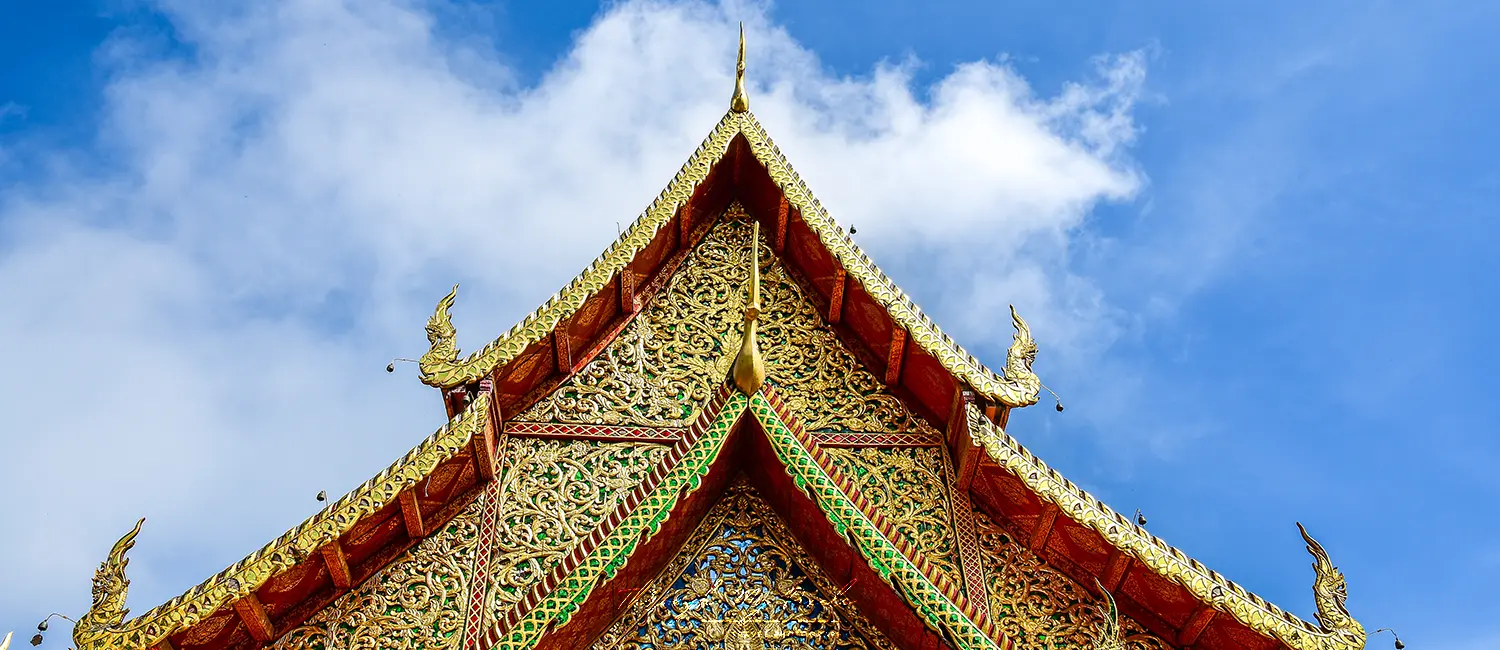
    Doesn’t it dazzle? Under the sun’s gaze, the ancient temple gleams and sparkles in gold.

    To marvel at its golden chedi (stupa), you’ll need to get up there. There are two choices – climb the 306-step naga staircase, or take the funicular tram.

    We did both — funicular up, steps down — and I recommend this combo. It’s all part of the experience! Plus, the intricately carved naga (serpent) railing makes for great photos. Although sadly, I didn’t take any! I had forgotten all about taking photos as I tried to make my way down the 306 steps.

    According to Hindu and Buddhist mythology, nagas are deities. These sacred serpents, running along both sides of the staircase, are guardians of the temple.

    Once you reach the top (1,000m above sea level), you’ll be rewarded with sweeping panoramic views of Chiang Mai below.

    Panoramic view of Chiang Mai city

    On clear days, the view is stunning — a mix of skyline and serenity. It isn’t surprising that many visitors often linger not just to admire the view but to enjoy a few quiet moments of reflection.

    Wat means temple in Thai, so you’ll see this prefix often in temple names across the country. The iconic temple of Wat Phra That Doi Suthep was founded in 1383. According to legend, it enshrines a sacred relic — part of Buddha’s shoulder bone — which gave rise to the name: Phra That (meaning “relic of the Buddha) and Doi Suthep (the mountain it sits atop). Check out Wikipedia if you are interested to know more about the temple.

    It’s a popular destination for both locals and tourists, especially in the cooler months. We visited in November — a peak travel time for European visitors escaping the winter chill — but it didn’t feel overwhelmingly crowded.

    Things to note:

    As with all Buddhist temples in Thailand, one should dress appropriately before entering:

    • No shorts or sleeveless tops
    • Shoes must be removed before entering temple buildings
    • Sarongs and wraps are available for rent at the entrance

    Entry Fees

    • Temple: 30 THB (foreigners)
    • Funicular tram: 20 THB

    Doi Pui Chiang Mai & the Hmong Tribal Village

    Just a little further up from Wat Phra That lies Doi Pui, the highest peak in Doi Suthep-Pui National Park at 1,685m above sea level. Here, you’ll find the Hmong Tribal Village, home to about 1,300 people across 200 households.

    Unlike Mae Kampong, this little village is a meander of alleys lined with shops selling handicraft items and hill tribe products, including ornaments, gemstones and clothing. There are also souvenirs, fruits, locally made tea, etc.

    It wasn’t too crowded when we visited. Out of respect, I refrained from taking any photos during this village walkthrough, especially if I wasn’t planning to buy anything.

    There’s also a small museum that you can visit if you’re interested in learning about Hmong history, textiles and farming tools. The Hmong people are one of Thailand’s largest hill tribes, known for their rich traditions, colourful clothing, and agricultural way of life.

    Capturing street moments

    I think street moments tell a story. It allows you to experience the authentic daily life of the locals. Be it a fruit seller who sets up shop off her pick-up truck, or the local Hmong riding his motorbike through the village, these scenes offer a deeper appreciation of the people and their environment.

    Featuring the landscape

    At the end of the alley walk, you’ll find a modest garden. While it doesn’t compare to the pretty flower farms in Mae Rim, its beauty lies in something more authentic: wooden homes nestled in the natural hillside. That’s the real charm — a balance of preserved tradition and gentle tourism.

    Right at the top sits Hmong Doi Pui Family Coffee. Order its local brew of Arabica coffee, sit back and relax. Enjoy the beautiful scenery laid out before your eyes and perhaps even a furry feline lounging nearby (I couldn’t resist snapping that cute little feline on the rails).

    Getting to Wat Phra That and Hmong Doi Pui Village

    From Chiang Mai’s Old City, it’s about a 45-min drive to Doi Suthep, then another 20-30 min uphill to Doi Pui. It’s a lot nearer compared to Doi Inthanon. Roads are narrow and winding, so hiring a private driver or joining a tour is highly recommended — especially if you’re not used to mountain driving.

    Besides booking your own private transport, you can get there via:

    • Songthaew (red truck taxis) – Budget-friendly and great if you’re not in a hurry. Don’t worry about getting back into town as you’ll find many lining up at the foot of the temple, waiting for anyone hailing a ride back to the Old City.
    • Taxis – Convenient and time-efficient
    • Day tours such as those by Klook and Viator. Many day tours combine Doi Suthep and Doi Pui, making it an easy combo for a half or full-day adventure.

    This post may contain affiliate links. If you click on them and make a purchase, I may earn a small commission at no extra cost to you. Thank you for your support!

    Klook.com
  • Be enchanted, with Mae Rim

    Be enchanted, with Mae Rim

    Mae Rim offers a different vibe from Doi Inthanon National Park and Mae Kampong.

    A little north of the Doi Suthep mountains, Mae Rim is known for its gorgeous mountain views, natural attractions, and a slower pace of life. Up here, you’ll find everything from flower farms and cafes to glamping resorts tucked into the hills. The region is also home to the indigenous Hmong people, adding cultural depth to the natural beauty of the place.

    Mae Rim
    Dried chilli
    Chiang Mai locals
    Chiang Mai locals

    I think young couples and newlyweds can consider spending a night glamping here. Waking up to the sounds of birds, catching the sunrise and enjoying a breathtaking view of the mountains and valleys. It certainly makes for a romantic getaway!

    But alas, we were travelling with a big group of seniors and children, so glamping was out of the question. But hey, Mae Rim still has lots to offer!

    Where is Mae Rim?

    Mae Rim is just 25km to 30km away from Chiang Mai’s Old City, making it much closer than Doi Inthanon and Mae Kampong. As you can tell by now, the Old City tends to be the base, where many do their day trips from.

    Once again, I would advise booking a private hire car or van if you are not driving. Or consider joining a small group tour. The ride up is rather winding but scenic.

    There are lots to see at Mae Rim. The Mon Jam area is where you will find many farms and flower gardens. The Queen Sirikit Botianic Garden is also a highlight with canopy trails, glasshouses with tropical plants and forested walking paths. There’s also the Mae Sa Waterfall, which is a very popular spot with the locals and makes for a nice stop for a picnic or a short hike. Taking advantage of its scenic location, there are also many lovely cafes with outdoor seating to chill and enjoy nature’s gift.

    So, where do we start? We couldn’t cover everything, but here’s what we managed to visit:

    I’ve plotted the locations in Google Maps below, including the directions for easy reference. The ride from the Old City to Pang Hwa Flower Garden takes about 50min to an hour.

    Mon Jam

    A highlight of the Mae Rim district is Mon Jam (also spelled Mon Cham). This beautiful mountaintop area at 1,300m above sea level is known for its cool weather, panoramic views and agricultural projects.

    On a clear day, you’ll see layers of misty hills, green terraced farms and a sky that… seems to go on forever.

    Once a quiet Hmong village, Mon Jam began transforming into a travel destination thanks to the Royal Project Foundation, which helped locals shift from slash-and-burn farming to sustainable agriculture. Today, you’ll see farms growing strawberries, cabbages, herbs, and flowers, as well as small local cafes, food stalls, and homestays scattered along the hillside. The area also has skywalks, zip-lines, and ATVs for those looking for a bit of light adventure.

    Mon Jam glamping and homestays
    Mon Jam glamping resorts

    Mon Jam is also where you will find glamping resorts. There are more than 20 glamping sites. Homestays are also available if you want to experience staying with the locals.

    This post may contain affiliate links. If you click on them and make a purchase, I may earn a small commission at no extra cost to you. Thank you for your support!

    Pang Hwa Flower Garden

    This wasn’t on our original itinerary. We had planned to visit Jin Ju Orange Farm but it was closed — so our driver suggested Pang Hwa Flower Garden instead. And OMG, what a great suggestion it was!

    Tourist admiring Mae Rim

    Did you know that there are reportedly 13 or more flower farms in Mae Rim, particularly around Mon Jam. For flower lovers, it’s an absolute paradise. That said, I don’t think you need to cover them all — even if you love blooms. And it also depends on when you visit.

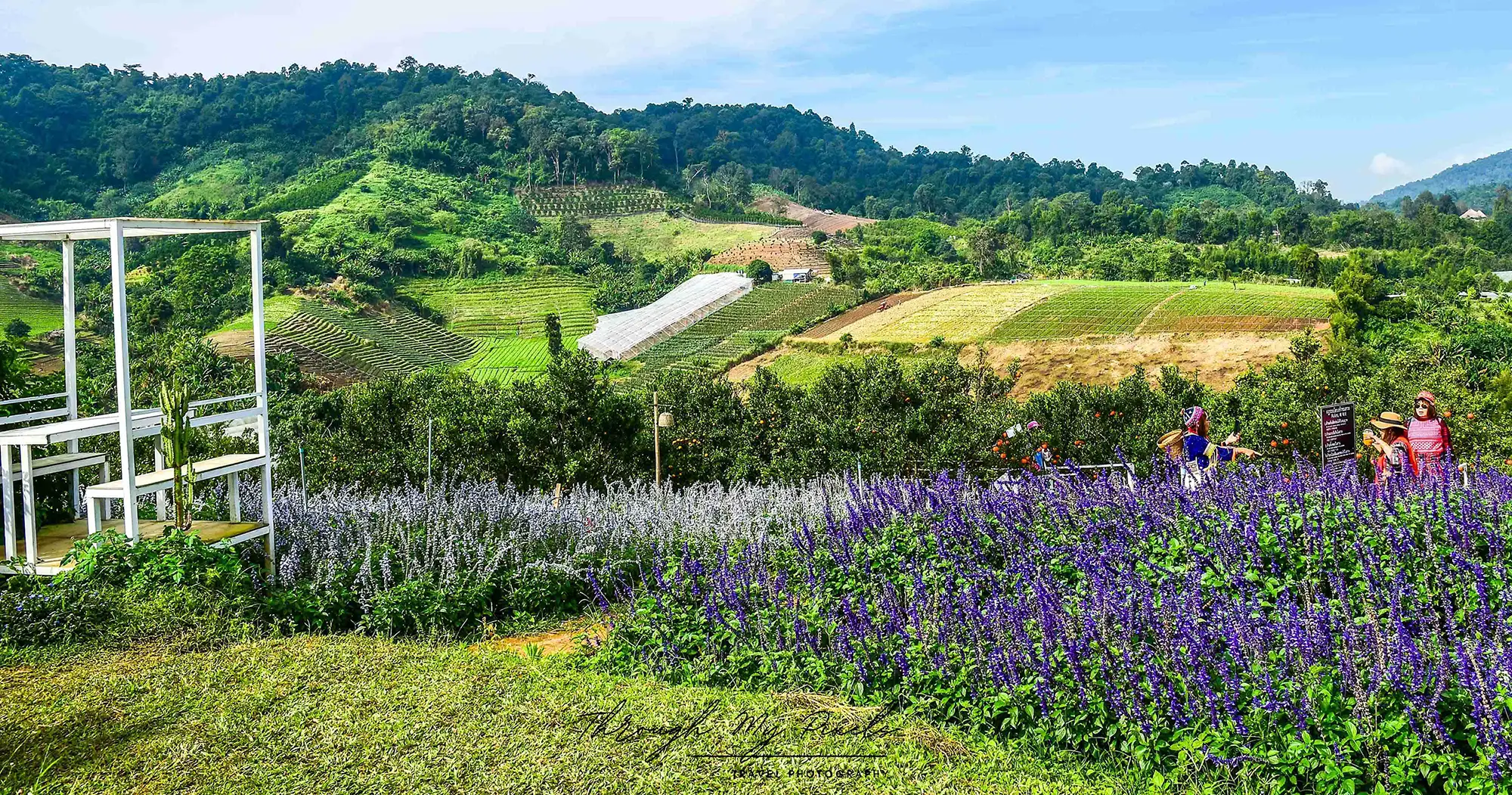
    Pang Hwa is an Instagrammer’s dream: colourful flower beds, rolling hills, a mountain-top setting close to the clouds. There’s a lavender garden and an orange orchard where you can also pick oranges. So we didn’t miss Jin Ju Orange Farm too much!

    There’s also a cafe here — perfect for soaking in the views with a hot drink in hand.

    • Open daily: 7am – 6pm
    • Entry fee: 100 THB (foreigners)
    • Orange-picking: 80 THB/kg

    Ying Yong Flower Garden

    Located in the Mon Jam area, the garden spans 16 acres and showcases a stunning variety of flowers like lavender, marigolds and sunflowers, set against a backdrop of blue skies and emerald green mountains.

    Yes, I’m going to say it again: Instagrammable. And truly, it is.

    They’ve done a great job of accentuating the natural beauty with walking trails and scenic viewing spots. One of the highlights here is an elevated boardwalk that stretches across the fields, offering sweeping panoramic views of Mon Jam.

    Currently, Pelago has a private tour which includes visiting Ying Yong and Pang Hwa gardens, along with a homestay lunch — a great way to experience local hospitality. There is also a short day tour which includes Mon Jam and Huay Tueng Thao Reservoir and Sculpture Park (quite a fun place with King Kong sculptures, sheep farm and others that should be fun for young children).

    Honestly, words don’t quite do it justice. So I’ll let the pictures do the talking.

    The best time to visit is between November to February when flowers are in full bloom and the weather is cool. But of course, there are other flowers to see in other times of the year, like sunflowers from March to May, margarets from June to August and marigolds from September to October.

    Whatever the time of the year you wish to go, just be warned, you won’t want to leave.

    • Open daily: 6am – 6pm
    • Entry fee: 100THB (foreigners-adult), 50THB (foreigners-child <10 years old)

    Skywalk Flower Farm

    By the time we arrived at Skywalk Flower Farm, the kids had pretty much hit their limit for flower appreciation. (Can’t blame them — after a full day of blooms, even the most patient little legs will start protesting.) But for us adults, this is a place you won’t want to miss.

    Similar to Ying Yong Flower Garden, there’s also an elevated boardwalk — but the view here hits differently. It overlooks a sheep farm, rolling valleys and offers yet another perspective of Mae Rim’s mountainous landscape.

    One standout feature here is a palm-shaped platform, perched dramatically over the hillside. Ready to feel on top of the world? Climb the steps — though be warned, there are no railings — and strike your poses. The view from the top is incredible and definitely one for the ‘Gram. Just don’t look down if you’re not a fan of heights! I tried… and I remember feeling weak in the knees!

    Nearby, there’s also a cosy cafe where you can relax, sip a latte and just gaze at the scenery.

    • Open daily: 7am – 8pm
    • Entry fee: 40THB (adults), 20THB (child)

    Want a sneak peek before you visit? Check out this beautifully shot video by Beyond — it captures the essence of Skywalk Farm perfectly.

  • At the roof of Thailand ~       Doi Inthanon National Park

    At the roof of Thailand ~ Doi Inthanon National Park

    Chiang Mai, 28 November 2024 – this was my first visit to Thailand’s charming northern city. When the idea of a holiday trip in Chiang Mai first came up, my mind was filled with images of beautiful temples, elephant performances, sizzling street food and relaxing Thai massages. That’s probably what comes to mind to most people — especially if they’ve never been there and only know it from guidebooks or travel shows. I wondered if there would be something more of the outdoors, you know, like nature walks, healthy trekking?

    Illustrated map of Thailand

    In my research, I found that one of the top recommended things to do in Chiang Mai is to explore its natural beauty.

    Chiang Mai is a mountainous region, surrounded by forested hills and highlands of northern Thailand. Its city lies in a valley and it’s a short drive to scenic mountain areas like Doi Suthep-Pui and Doi Inthanon, known as Thailand’s highest peak at 2,565m above sea level. This gives Chiang Mai its cooler climate, suitable for trekking, waterfall hikes, and nature-based tourism. And November is an ideal time to go!

    So, the national parks of Doi Inthanon and Doi Suthep-Pui made it into my itinerary. First stop, Doi Inthanon.

    Did you know that it’s part of the Himalayan mountain range? I suppose I can now say I climbed the Himalayas! 😄

    When we visited, the temperature ranged from a high of 12°C to a low of 6°C. Well, it’s not exactly Himalayan cold — but still so Shiok! (In Singapore English, “Shiok” means very enjoyable or satisfying.)

    Where Is Doi Inthanon?

    The national park is located about 70km southwest of Chiang Mai’s Old City. It’s one of the most popular day trips.

    According to the Thai National Parks, the park honours King Inthawichayanon, who was dedicated to preserving the northern forests. Nicknamed “The Roof of Thailand”, Doi Inthanon is a haven for bird watchers, with over 360 species recorded and home to some of Thailand’s most spectacular waterfalls, including:

    There are trails for all levels, from easy boardwalks to moderately challenging treks, such as the Ang Ka Nature Trail and the Kew Mae Pan Nature Trail.

    Ang Ka Nature Trail

    If climbing isn’t your thing — as was the case for our group, which included several seniors — the Ang Ka Nature Trail is a very doable one. Even at a height of 2,500m above sea level, the trail is easy and scenic.

    Moss at Ang Ka Nature Trail

    It’s a short 360m loop on a well-maintained wooden boardwalk and concrete steps. It winds through a temperate evergreen forest, home to rare plants like Rhododendron, Sphagnum Moss and Ferns. Wildlife such as the Common European White-toothed Shrew, Pere David’s Vole and Green-tailed Sunbird have also been spotted here.

    We strolled at a leisurely pace, taking about 30 min, while pausing often to enjoy the tranquil, misty landscape of thick moss, tall trees and crisp mountain air. Certainly a relaxing walk for all ages. Just be careful if it has rained, as the boardwalk can be a bit slippery.

    Tall canopy at Ang Ka Nature Trail

    Kew Mae Pan Nature Trail

    On the other hand, the Kew Mae Pan trail is more for the adventurous. The total distance is about 3km, 10 times the length of the Ang Ka Nature Trail, with higher elevations and more rugged terrain. The journey takes about 2 to 4 hours, depending on the individual. It’s not suitable if you have mobility issues but the views make every step worth it. There’s a reason why it’s among the most popular hiking routes up here.

    Kea Mae Pan viewing point

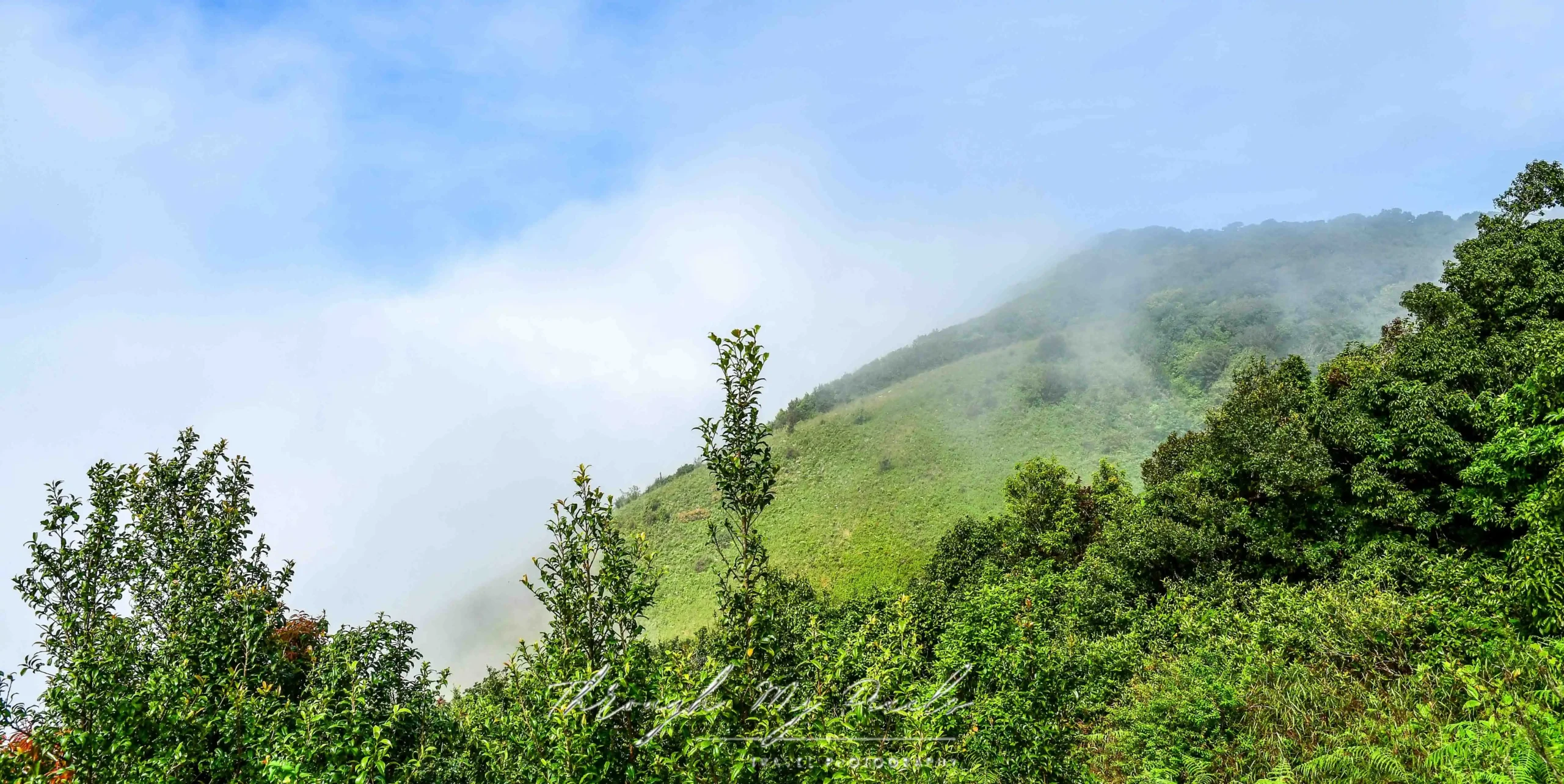
    At 2,200m, you’ll reach one of the most iconic panoramic viewpoints in the region. On a clear day, you’ll see a sea of clouds blanketing the valleys below.

    The trail route below might give you a good idea of what to expect.

    Powered by Wikiloc

    📌 Note: The trail is closed from June to October (rainy season). You cannot venture into this area on your own – it is compulsory to hire a guide. You’ll be asked to pay 200 THB per group at the entrance and a guide from the local Hmong hill tribe will lead you on the journey.

    Do not be misled by their looks or size, though. They have been doing this for a long time and have guided many tourists on the route.

    Our guide was amazing — quick on her feet and knowledgeable. We didn’t finish the loop (we had kids and seniors waiting), but the experience was incredible. We missed the Royal Pagodas viewpoint, but it gives us a reason to return.

    Royal Pagodas at Doi Inthanon
    Photo of the Royal Pagodas from Freepik.

    Anyways, for those of you who are interested in this trail and want to feel like Frodo in the Fellowship of the Ring (we certainly felt like that with the bamboo hiking sticks), pin Doi Inthanon National Park and the Kew Mae Pan Nature Trail into your itinerary.

    Wachirathan Waterfall

    Another spot you should not miss is the Wachirathan Waterfall. While not a very tall one at 80m, it’s arguably the most popular and the most impressive at Doi Inthanon National Park. The viewing platform is just steps from the car park, and the spray from the falls is refreshing and energising! There’s a cafe nearby where you can grab a cuppa coffee and just enjoy the waterfall.

    The waterfall is definitely one of the favourite photo spots in the area. But don’t go too near else your camera equipment is going to get all wet.

    Photography tips

    • Capture people in the frame to show scale.
    • Try long exposure shots to give the water a silky effect. This is best taken with a tripod so you can keep the camera stable during the long exposures.
    • If you’re lazy like I was (no tripod), just hold your camera steady, lower the shutter speed, and experiment! This can also be done on a mobile phone. Use pro mode or manual, set shutter speed to 1-4 secs and ISO as low as possible.
    • Don’t just focus on the waterfall. Explore the surrounding areas, where the water flows,etc.
    • For the trails, capture the nature around you. The tall canopies, close-up of the moss, fungi, wildlife or little creatures if you can spot them.
    • Wide shots of panoramic views or “sea of clouds” are must-haves.

    Getting to Doi Inthanon National Park

    First, note that there is an entrance fee of 300 THB per adult for all foreigners.

    The best way to get around Chiang Mai, if you are in a big group, is to book a driver with a van. There were 13 of us so we booked 2 drivers and 2 vans for our entire trip, which makes it a lot easier for us to go wherever we want and adjust our itinerary accordingly. So getting to Doi Inthanon from our hotel at the Old City was a breeze. It’s a 2-hr journey.

    If you’re travelling solo or as a couple and if you prefer a more free and easy trip, then get a taxi to bring you up the mountain.

    There’s a lot to see and cover in Doi Inthanon which will take more than a day. In which case, consider joining day tours where you get a guide to bring you on the best spots. For instance, Klook offers a variety of them.

    Here are two options:

    1. Doi Inthanon National Park Day Tour (≈ USD 56/adult):
      Includes Wachirathan + Mae Klang Waterfalls, Karen Hill Tribe Village, Royal Pagodas, and more.
    2. Eco-Adventure Tour (≈ USD 83/adult):
      This is a new tour. A full day of guided hikes, bamboo rafting, swimming, lunch, and even tree planting! There’s also a 2-day option with overnight village stay.

    This post may contain affiliate links. If you click on them and make a purchase, I may earn a small commission at no extra cost to you. Thank you for your support!

    Klook.com

    Whether you’re a casual nature lover or a full-blown hiker, Doi Inthanon National Park has something for everyone. From mystical cloud forests to refreshing waterfalls and sky-high viewpoints, it’s a highlight of any Chiang Mai itinerary.