
Chiang Mai Old City – lined with a moat around, it was once the capital of the Lanna Kingdom in the 13th century. Today, the remnants of its city walls and gates still stand, offering a glimpse into its storied past. It is a town filled with cosmopolitan cafes, serene Buddhist temples, bustling local markets and the perfect base for day trips around Chiang Mai.
Unlike the modern buzz of Bangkok with its sprawling malls and skytrains, the Old City feels like a laid-back cousin — a charming blend of history, spirituality and quaint urban cafes.
A City of Temples
One of the most remarkable aspects of the Old City is its density of temples — over 30 Buddhist temples (known as Wats) are packed into just 1.6 sq km. That’s more temples per square metre than almost anywhere in Thailand!
Did You Know?
- Thailand has over 40,000 temples.
- Bangkok has more than 400.
- Chiang Mai has over 300.
No wonder it’s called the Land of Temples!
If temple-hopping is on your list, the Old City is the best place to start. Here are some of the most significant ones to visit:
- Wat Phra Singh – This is probably the most recognised temple and the most revered in the Old City. It is also known as the Golden Temple. Much of its architecture is covered in gold. Prominent in its grounds is its giant golden chedi, a distinctive feature that you surely cannot miss. The temple dates back to 1345 and houses the sacred relic of the Phra Singh Buddha, which is believed to have originated in Sri Lanka.
- Wat Chiang Man – This is the oldest temple, known as the first royal temple of Chiang Mai. It was built in 1296 by King Mengrai of the Lanna Kingdom. The temple sits tucked away near the northeast corner of the city, off Ratchapakhinai Road.
- Wat Phan Tao – Built entirely of teak wood and often overlooked, it has a serene charm. Located next to the sacred Wat Chedi Luang, the temple was originally a throne hall for King Mahotara Prateth. Its origin dates back to the 14th century. It is also known as the “Temple of a Thousand Kilns” because of its historical role in producing Buddha images using numerous small clay kilns — especially during the Lanna period. Today, the temple is a key site for cultural festivals like Loy Krathong (Festival of Lights) and the Yi Peng Festival (Northern Thai Lantern Festival).

Wat Phra Singh Main Prayer Hall

Naga statues – a common feature in many temples

Wat Phra Singh

Buddha statue in Wat Phan Tao

The ubosot of Wat Phra Singh

Wat Phan Tao
The Temple of the Great Stupa – Wat Chedi Luang
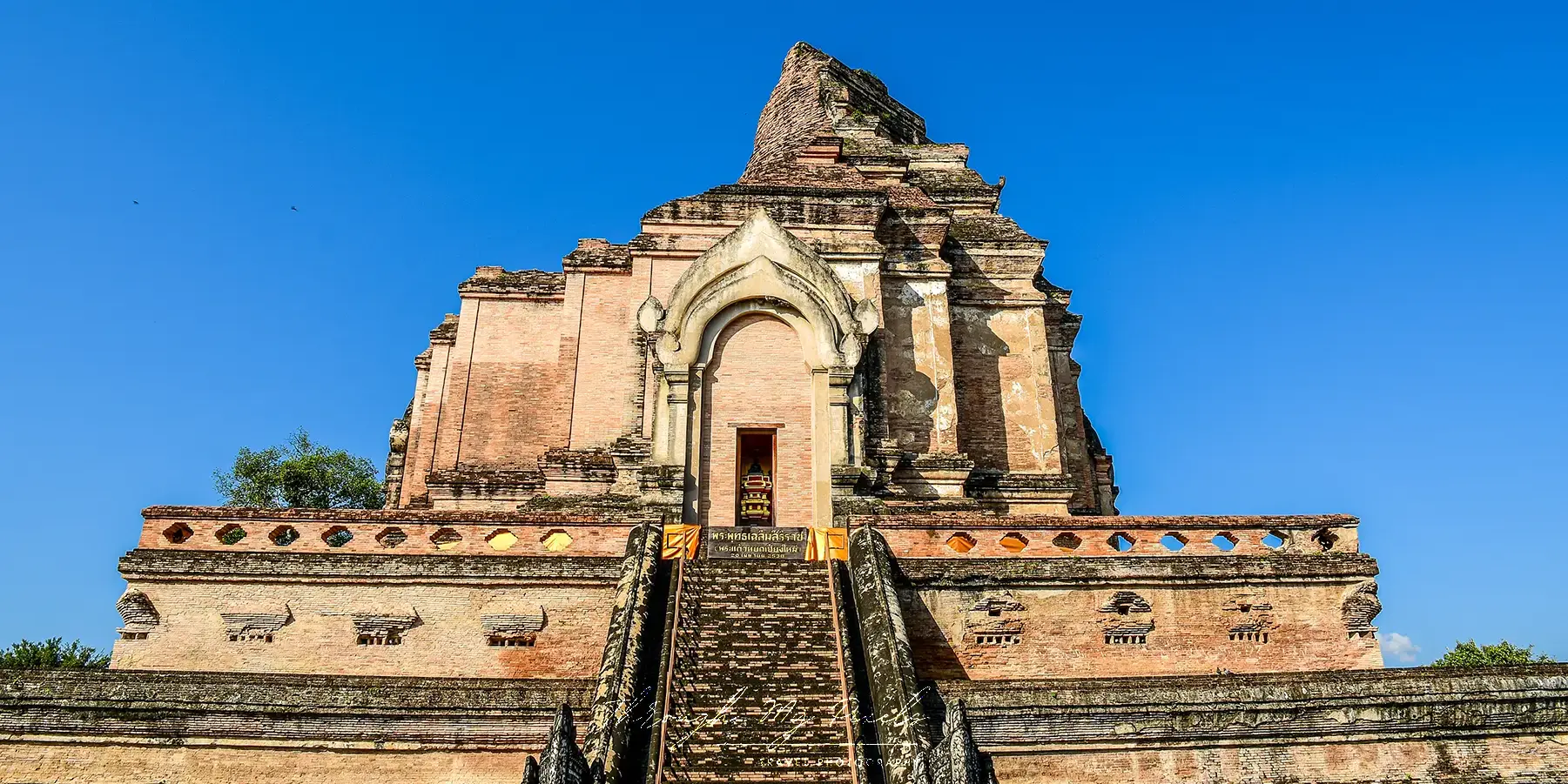
For me, the highlight has to be Wat Chedi Luang, the feature image of my post. Don’t you think it has the Indiana Jones vibes?


Distinct from the other temples, which are usually adorned with gold, this sacred temple has been preserved in its ruins.
Building of the temple started in 1391 but it was only completed nearly a century later. Then, it was considered one of the largest temples with a 85m-tall chedi, giving it the name “Temple of the Great Stupa”. However, an earthquake in 1545 destroyed much of it and it was only partially restored in the 1990s.
The temple is significant in the history of Thailand as it used to house the Emerald Buddha, Thailand’s most sacred relic, for about a hundred years. Following the earthquake, it was moved to Wat Phra Kaew in Bangkok in 1551. Now, what you’ll see is a replica at the top of the temple’s staircase.
For me, there’s something truly special about photographing ruins like this — they preserve the spirit of the past and bring a mystical quality to every frame.
But Wat Chedi Luang also has a modern look. Below are photos of the main viharn, which faces the main entrance. Dating back to 1928, it contains the large standing Buddha image Phra Chao Attarot. The viharn itself is quite an intricate work of art. So, interestingly, the entire site is a mixed of modernity and its past.


A Photowalk Through the Old City
Take time to also go on a leisurely stroll of the Old City. The streets are very walkable and easy to navigate, with the four gates (North: Chang Phuak, East: Tha Phae, South: Chiang Mai, West: Suan Dok) serving as key entry points. There’s always Google Maps if you really need help.
Other than tourists on temple walks, you’ll also see the locals going about their day, street vendors selling ice cream and drinks from their push carts, tuk-tuks buzzing by, numerous massage shops, cafes to pop into for a quick coffee or tea break and of course, night markets, which are quite an Asian thing.


So walk around, explore and snap photos to tell your story of Chiang Mai and its Old City.
I’ve pinned down some of these locations in the map below for reference.
The Charming Chiang Mai Flower Festival
We stumbled upon this unexpectedly — and what a lovely surprise it was! I think it adds another dimension to the tour, where much of it has been about nature, sacred spaces and old towns – Doi Suthep, Doi Inthanon, Mae Kampong, Mae Rim. The Charming Chiang Mai Flower Festival showcases lights and technology. It’s about vibrance!
The 2024 festival was held at the Chiang Mai PAO Park from 29 November 29 2024 to 5 January 2025. While details for 2025/2026 are yet to be announced, it usually takes place around the same time each year.
It’s free to attend and open daily from 8.30am to 11pm. So, keep an eye on their Facebook page for the latest updates.
Festival Highlights:
- Stunning light displays
- Hourly Fountain shows (7pm to 10pm)
- ‘Live’ music performances
- Firework displays
- Night market and food stalls
- Foral garden of tulips, orchids, and lilies during the day


Consider staying at The Rim Resort
The Old City offers a range of stays from charming guesthouses in quiet alleyways to boutique hotels with Lanna-style decor. One place I would recommend would be The Rim Resort.

The resort is tucked along the quiet western edge of the Old City. While not in the city central, its quiet location offers the respite that you need, yet keeping you relatively close to what the city and the outskirts have to offer.
Wat Phra Singh is a 5-min walk away, The Sunday Walking Street Market about 10min away and One Nimman and Maya Lifestyle Shopping Centre at the outskirts is a short tuk-tuk ride away.
The accommodation is comfortable and homely. The rooms are quite spacious with separate bathtubs and showers, and the daily breakfast was delightful. Our room came with free welcome drinks and Thai snacks. We were also given a voucher to redeem a bowl of the famous Khao Soi at the restaurant and it was deliciously good! There are also free snacks available daily at the hotel lobby which is a treat especially for the young ones.
What stood out most was its excellent customer service which puts us right at ease. They take great care of our needs whenever we need.
Whether you’re travelling alone, as a couple or with children, I think The Rim will make a lovely stay.
This post may contain affiliate links. If you click on them and make a purchase, I may earn a small commission at no extra cost to you. Thank you for your support!
And that about wraps up what I wanted to share about Chiang Mai! There are so many more fascinating places and experiences I wasn’t able to cover this time. But perhaps that’s something to look forward to on my next visit to the former Lanna Kingdom. Until then, sawasdee ka!
Klook.com