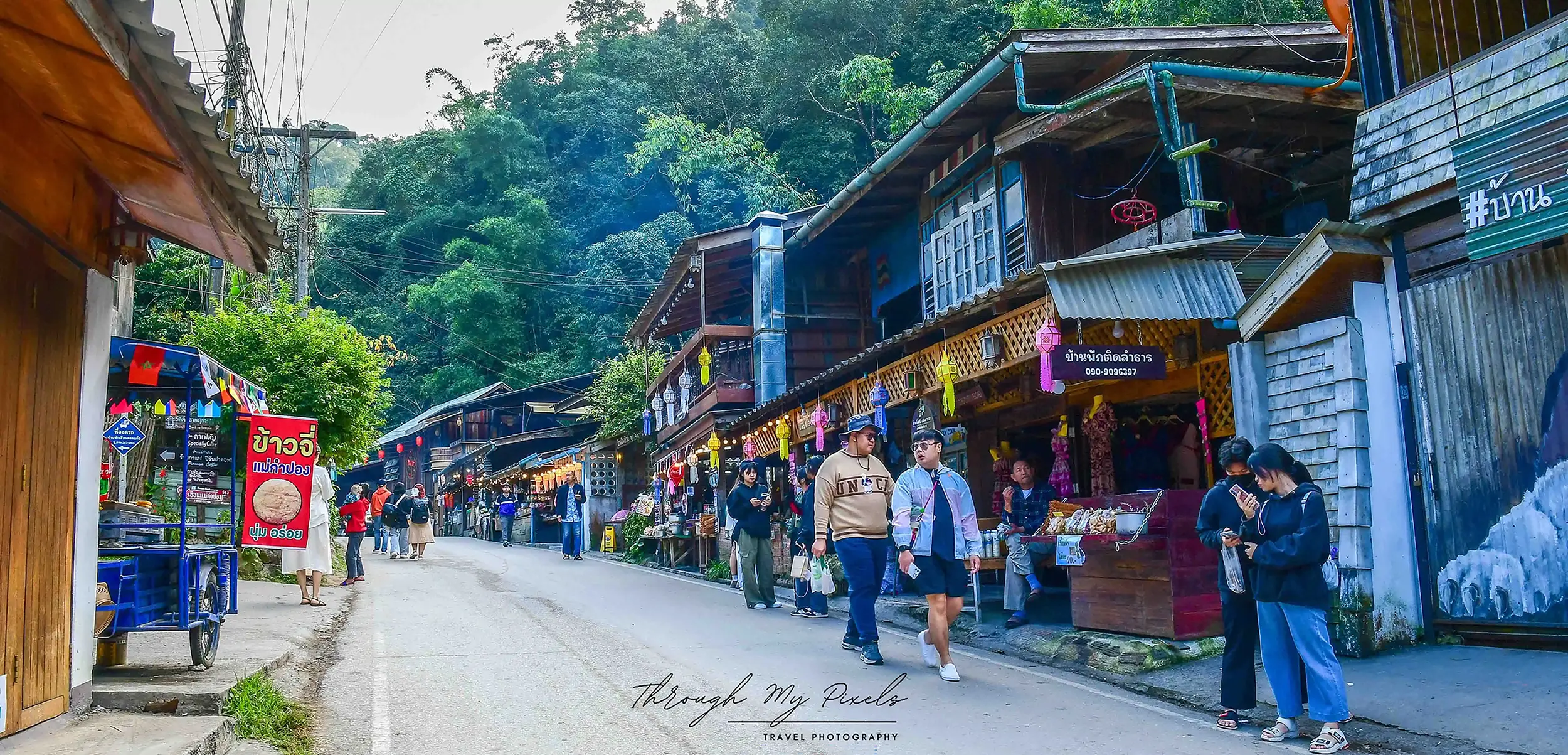
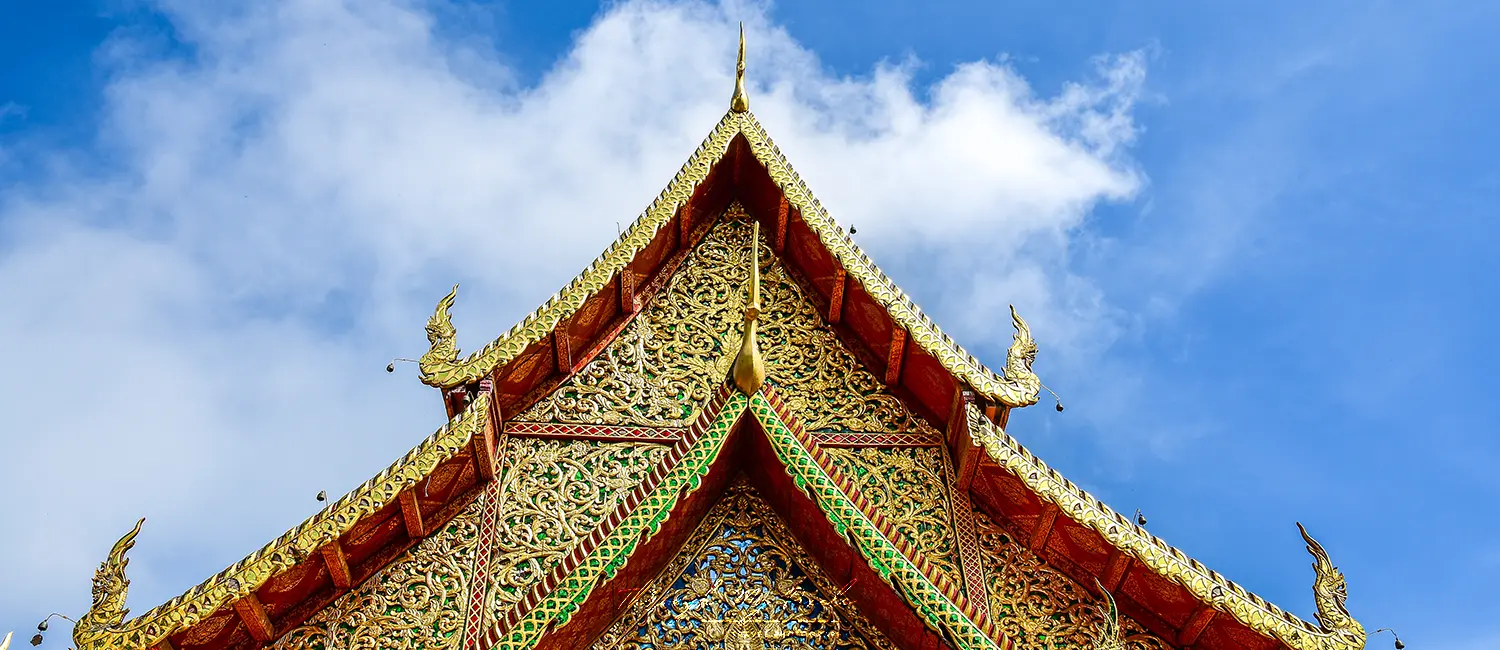
In an earlier post, I wrote about visiting Doi Inthanon. Now, let me share with you about Doi Suthep and Doi Pui.
Doi Suthep is highly recommended for first-time visitors to Chiang Mai. If you only have time to visit one temple in Chiang Mai, make it Wat Phra That Doi Suthep, one of Northern Thailand’s most revered temples.
The Dazzling Wat Phra That Doi Suthep
I could think of no better word to describe Wat Phra That than “dazzling”.

Doesn’t it dazzle? Under the sun’s gaze, the ancient temple gleams and sparkles in gold.
To marvel at its golden chedi (stupa), you’ll need to get up there. There are two choices – climb the 306-step naga staircase, or take the funicular tram.
We did both — funicular up, steps down — and I recommend this combo. It’s all part of the experience! Plus, the intricately carved naga (serpent) railing makes for great photos. Although sadly, I didn’t take any! I had forgotten all about taking photos as I tried to make my way down the 306 steps.
According to Hindu and Buddhist mythology, nagas are deities. These sacred serpents, running along both sides of the staircase, are guardians of the temple.
Once you reach the top (1,000m above sea level), you’ll be rewarded with sweeping panoramic views of Chiang Mai below.

On clear days, the view is stunning — a mix of skyline and serenity. It isn’t surprising that many visitors often linger not just to admire the view but to enjoy a few quiet moments of reflection.


Wat means temple in Thai, so you’ll see this prefix often in temple names across the country. The iconic temple of Wat Phra That Doi Suthep was founded in 1383. According to legend, it enshrines a sacred relic — part of Buddha’s shoulder bone — which gave rise to the name: Phra That (meaning “relic of the Buddha) and Doi Suthep (the mountain it sits atop). Check out Wikipedia if you are interested to know more about the temple.
It’s a popular destination for both locals and tourists, especially in the cooler months. We visited in November — a peak travel time for European visitors escaping the winter chill — but it didn’t feel overwhelmingly crowded.
Things to note:
As with all Buddhist temples in Thailand, one should dress appropriately before entering:
- No shorts or sleeveless tops
- Shoes must be removed before entering temple buildings
- Sarongs and wraps are available for rent at the entrance
Entry Fees
- Temple: 30 THB (foreigners)
- Funicular tram: 20 THB
Doi Pui Chiang Mai & the Hmong Tribal Village
Just a little further up from Wat Phra That lies Doi Pui, the highest peak in Doi Suthep-Pui National Park at 1,685m above sea level. Here, you’ll find the Hmong Tribal Village, home to about 1,300 people across 200 households.
Unlike Mae Kampong, this little village is a meander of alleys lined with shops selling handicraft items and hill tribe products, including ornaments, gemstones and clothing. There are also souvenirs, fruits, locally made tea, etc.
It wasn’t too crowded when we visited. Out of respect, I refrained from taking any photos during this village walkthrough, especially if I wasn’t planning to buy anything.
There’s also a small museum that you can visit if you’re interested in learning about Hmong history, textiles and farming tools. The Hmong people are one of Thailand’s largest hill tribes, known for their rich traditions, colourful clothing, and agricultural way of life.
Capturing street moments


I think street moments tell a story. It allows you to experience the authentic daily life of the locals. Be it a fruit seller who sets up shop off her pick-up truck, or the local Hmong riding his motorbike through the village, these scenes offer a deeper appreciation of the people and their environment.
Featuring the landscape


At the end of the alley walk, you’ll find a modest garden. While it doesn’t compare to the pretty flower farms in Mae Rim, its beauty lies in something more authentic: wooden homes nestled in the natural hillside. That’s the real charm — a balance of preserved tradition and gentle tourism.


Right at the top sits Hmong Doi Pui Family Coffee. Order its local brew of Arabica coffee, sit back and relax. Enjoy the beautiful scenery laid out before your eyes and perhaps even a furry feline lounging nearby (I couldn’t resist snapping that cute little feline on the rails).
Getting to Wat Phra That and Hmong Doi Pui Village
From Chiang Mai’s Old City, it’s about a 45-min drive to Doi Suthep, then another 20-30 min uphill to Doi Pui. It’s a lot nearer compared to Doi Inthanon. Roads are narrow and winding, so hiring a private driver or joining a tour is highly recommended — especially if you’re not used to mountain driving.
Besides booking your own private transport, you can get there via:
- Songthaew (red truck taxis) – Budget-friendly and great if you’re not in a hurry. Don’t worry about getting back into town as you’ll find many lining up at the foot of the temple, waiting for anyone hailing a ride back to the Old City.
- Taxis – Convenient and time-efficient
- Day tours such as those by Klook and Viator. Many day tours combine Doi Suthep and Doi Pui, making it an easy combo for a half or full-day adventure.
This post may contain affiliate links. If you click on them and make a purchase, I may earn a small commission at no extra cost to you. Thank you for your support!
Klook.com