Tag: trails

  • Along the Woodlands Heritage Trail

    Along the Woodlands Heritage Trail

    I’ve been walking the heritage trails in Singapore with friends. So far, I’ve managed to clock S$25 in rewards.

    This next one brings us to the north of Singapore — Woodlands. The trail takes you very near to a favourite Singaporean hangout — Johor Bahru, Malaysia.

    Similar to the Kampong Glam route, this trail spans about 4.4km and is an easy and enjoyable walk. I’ve mapped out a route connecting the five checkpoints below, which should give you a good idea of what to expect.

    Checkpoint 1 – Woodlands North MRT Station

    The trail begins at Woodlands North MRT station, the northern terminus of the Thomson-East Coast Line. It’s just a stop away from Woodlands MRT if you are coming from the North-South Line.

    Once you exit the station, you might wonder if you’ve arrived at the right place. Unlike most MRT stations in Singapore, which are surrounded by malls or residential areas, this one feels almost like it’s in the middle of nowhere — with construction sites all around.

    That’s because the area is currently undergoing a major transformation as part of the Woodlands Gateway, a 35-ha development that will eventually become a bustling hub connecting Singapore and Malaysia. The first phase is expected to be ready by 2030, featuring commercial spaces, lifestyle amenities, retail and F&B offerings, as well as around 10,000 new homes.

    This will also be where the much-talked-about Johor-Singapore (JB-SG) Rapid Transit System (RTS) Link connects to the Woodlands North MRT station, linking Singapore to JB and the Johor-SG Special Economic Zone. The RTS is expected to open by end-2026. Commuting between JB and Singapore will be much more convenient!

    While the area is rapidly transforming, it also has a rich past.

    Woodlands once served as an important military site. The British built a naval base along the coast, complete with depots for torpedoes and ammunition. During the Japanese invasion of Singapore in early 1942, Woodlands and Kranji formed part of the military frontline. An Australian Army field HQ was later converted into a POW camp by the Japanese army.

    Woodlands was also home to KD Malaya, the former Royal Malaysian Navy HQ, which operated here from the 1950s to 1997. The admin block will be conserved and will form part of a new Woodlands North Coast Integrated Development, which will include sports, community, healthcare, F&B and social services.

    The former Malaysian Base Jetty was also part of the naval base. Today, it’s known as the Woodlands Waterfront Jetty, which is where we’ll arrive at the next checkpoint.

    Checkpoint 2 – Former Malaysian Base Jetty

    This 400m jetty is today part of the Woodlands Waterfront Park and is a popular recreational spot for joggers, anglers and families.

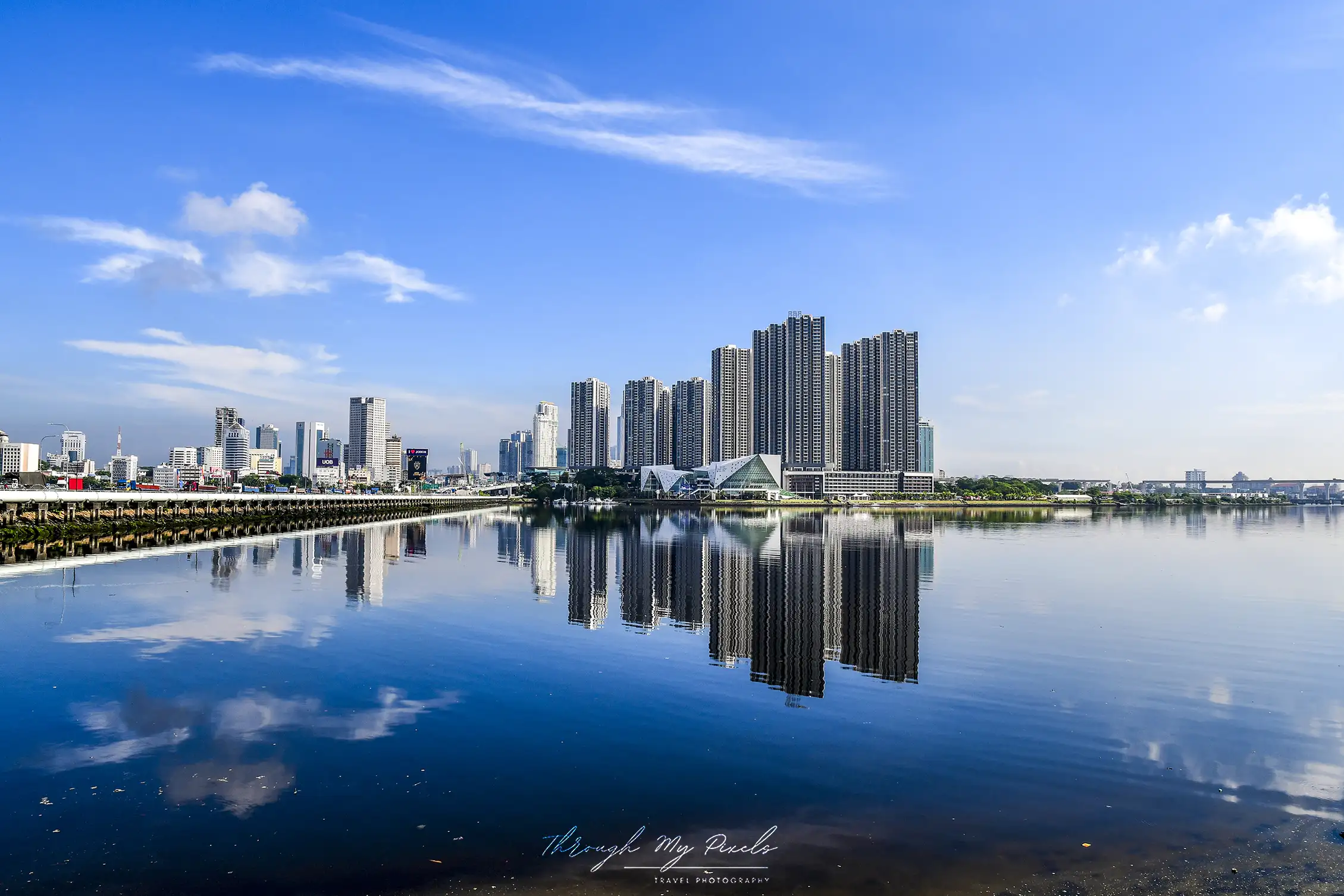
    It’s also widely considered one of the best sunset spots in Singapore, offering panoramic views of the Johor Straits and JB skyline in the distance.

    As I’ve mentioned, the jetty was once part of the Royal Malaysian naval base. Back then, it served as a docking station for naval vessels and was used for ship commissioning and parades.

    To reach the next checkpoint, you’ll walk about 1km along the coast. Take your time here — enjoy the sea breeze, soak in the coastal scenery and maybe even spot some wildlife!

    Here’s what I’ve captured along the route.

    Checkpoint 3 – Woodlands Waterfront Promenade

    Now it’s a pity that at the time of my walk, the promenade area was undergoing development, which I think will probably take a while. It’s part of the Draft Master Plan 2025, which will transform this northern coastal area into a more vibrant and connected district.

    From here, the route continues along the Marsiling Park Connector, bringing you past the nearby Causeway and along the Woodlands Checkpoint — one of the busiest land crossings in the world, with over 300,000 travellers daily.

    Did you know?

    The British blew up the Causeway during WWII to slow the Japanese advance into Singapore.

    Checkpoint 4 – Masjid An-Nur

    It’s hard to miss this next landmark.

    Masjid An-Nur

    The striking blue tower is a focal point in Woodlands. This 55m structure is a minaret, a tall tower typically attached to a mosque. This is the Blue Mosque, officially known as the Masjid An-Nur.

    Established in April 1980, it was the first mosque built in Woodlands. Its distinctive minaret is the tallest in Singapore. The mosque was upgraded and reopened in 2013 and can accommodate up to 6,000 worshippers.

    By this point, you’ll have reached the Marsiling estate — and it’s just another a 10min walk to the final checkpoint.

    Checkpoint 5 – Marsiling Lane Market & Food Centre

    Marsiling Lane Market & Food Centre

    Finally — the last stop and probably a very welcome one: a hawker centre.

    Built in 1975 and upgraded in 2009, Marsiling Lane Market & Food Centre houses over 100 market stalls and 50+ cooked food stalls, offering plenty of options for a well-deserved meal after the walk.

    Check out Seth Lui’s blog for 10 affordable and yummy food stalls.

    My Takeaway

    And that’s a wrap for this trail!

    This is a very manageable and scenic route. For about a third of the journey, you’ll be walking along the coast, where the sea breeze offers some relief from the heat.

    As mentioned earlier, the jetty is a fantastic spot for sunset photography, so consider heading there in the evening if you’re hoping to catch golden hour. Otherwise, the trail offers a great mix of urban and nature landscapes, perfect for photography — including beautiful reflection shots of the JB skyline across the strait.

    More than anything, this walk is a reminder that even in a small city like Singapore, there are still plenty of lesser-explored corners waiting to be discovered. Come back in a few years and this area will likely look completely different once developments like Woodlands Gateway are completed.

    If you are interested in diving deeper into the history of the area, the National Heritage Board has a very detailed booklet on Woodlands and its landmarks.

  • New SG Heritage Trails

    New SG Heritage Trails

    Have you walked the new heritage trails yet?

    If you haven’t heard, five trails have been added to the Walking Trails @ CDC initiative, a programme by the Community Development Councils in partnership with GovTech Singapore and CrowdTaskSG.

    The first five trails were launched in August 2025, taking walkers along landmarks and neighbourhoods around Singapore, including the Rail Corridor, Bukit Timah Railway Station, Victoria Concert Hall, Punggol Digital District, East Coast Beach and Little Guilin @ Bukit Gombak.

    Walking Trails @ CDC (Heritage Edition)

    These five new Heritage Edition trails, launched in March 2026, have already drawn many Singaporeans. This latest addition is a collaboration with the National Heritage Board, designed to bring Singaporeans closer to Singapore’s rich heritage through an engaging and rewarding walking experience. While digital participation is currently available only to Singaporeans, visitors are still welcome to follow the routes and explore the checkpoints at their own pace.

    The concept remains the same as the earlier trails: complete all five checkpoints, including two tasks at each stop, and receive a S$5 RedeemSG voucher. Catch all six Ollies along the way to earn an additional S$10 voucher. That’s a possible S$15 reward for simply clocking steps and discovering Singapore, and up to S$75 if you complete all five trails. The vouchers can be used at participating supermarkets such as Fairprice, Sheng Siong, etc.

    Infographic on Heritage Walking Trail
    Infographic on Heritage Walking Trail Tasks & Rewards

    These Ollies actually guide you towards the next checkpoint. There are many of them but they are really elusive. It’s not easy to catch all six of them! It took me the fourth walk before I managed to catch all Ollies. For these new trails, 200 Ollies are up for grabs each month for six months.

    Walking Trails @ CDC Initiative with NHB

    The five Heritage Edition Trails are:

    It’s really not difficult. Each trail spans about 4km and takes approximately 1.5 to 2 hours at a leisurely pace. That was how long it took a group of friends and me, with plenty of time to soak in the surroundings and snap photos. I’ve done four walks now — three of the new ones and one older trail. It doesn’t have to be just about walking — it can easily turn into a fun photography outing too.

    The Central Singapore Heritage Trail: Kampong Glam

    My first walk was the Kampong Glam trail. This starts at the Peranakan Museum on Armenian Street and ends at the Jalan Besar Stadium.

    Checkpoint 1 – Peranakan Museum

    Peranakan Museum

    It’s fairly easy to get to the museum, just a 10-min walk from three MRT stations – City Hall (East-West/North-South Lines), Bras Basah (Circle Line) and Bencoolen (Downtown Line).

    Peranakans — generally known as Straits Chinese — are a Southeast Asian community of mixed Chinese and Malay or Indonesian heritage. You’ve probably heard the terms Babas and Nonyas, which refer to Peranakan men and women respectively. Their rich culture has been made familiar to many Singaporeans through popular dramas such as The Little Nyonya and Emerald Hill.

    If you’re interested in learning more about the Peranakan heritage — from the nyonya kebaya (traditional outfit for women) and cuisine like ayam buah keluak to oral traditions such as the pantun (traditional Malay poetic form) — this museum is a wonderful place to start.

    Did you know?

    The building was the former Tao Nan School from 1912 to 1982. Philanthropist Dato Lee Kong Chian was once a student there. The museum is also located where the first Botanic Garden was situated.

    Checkpoint 2 – Bras Basah Complex

    Walking past landmarks such as the historic Cathedral of the Good Shepherd, St. Andrew’s Cathedral and the Singapore Management University, you’ll eventually arrive at the second checkpoint — Bras Basah Complex, an iconic destination that was especially significant in the 1980s.

    Back then, it was a popular venue for Singapore xinyao (新谣) singers to launch and promote albums. For the uninitiated, xinyao refers to a uniquely Singaporean genre of Mandarin songs written and performed by local youths, and it played an important role in shaping the nation’s music scene.

    If you are interested in knowing more about the evolution of xinyao, catch Mediacorp’s “Tuesday Report: Encounter Under The Stars 星期二特写”. Here’s the YouTube video of episode one.

    The Complex also earned the nickname “City of Books” because of its many bookstores. It was likewise a go-to destination for art students in search of materials and supplies. Even today, it retains much of its original identity, with language centres, music stores, and art galleries still occupying its corridors. A nod to its artsy and vibrant heritage, the building is now illuminated with colours and adorned with murals that reflect the creative spirit of the precinct.

    Earlier, on 7 and 8 March, the Complex hosted an open house featuring live performances, movie screenings and a creative craft market to mark the Bras Basah-Bugis precinct’s continuing journey as a creative district.

    Checkpoint 3 – Masjid Sultan

    It’s impossible to miss the majestic golden dome of Masjid Sultan or Sultan Mosque, the next checkpoint. Built in 1824, it remains both the heart of Kampong Glam and an important landmark for Singapore’s Muslim community.

    The district itself is a fascinating mix of Malay, Arab, Chinese, Indian, and European influences. In the early 19th century, it was designated by Sir Stamford Raffles for the Malay, Arab, and Muslim communities, becoming home to merchants, sailors, and families from across the Malay Archipelago. Today, it’s filled with colonial-era shophouses, boutique shops, cafés, and vibrant street art. Haji Lane, in particular, is one of the most Instagrammable spots in Singapore, attracting tourists year-round!

    Checkpoint 4 – Golden Mile Food Centre

    Many locals still fondly know this as the “Army Market.”

    In the past, army boys would come here to buy boots, socks, towels, and military essentials. Over time, it has transformed into a place for street fashion and vintage attire.

    Food-wise, this stop is also a real treat. Built in 1975 to resettle hawkers from the old Jalan Sultan street market, it is known for heritage favourites such as Hokkien mee, braised duck rice, curry chicken noodles, and Peranakan dishes. Long queues often form around its old-school stalls, where recipes and flavours have been passed down for generations. These days, the centre also features a growing mix of contemporary and fusion stalls, from pasta and grilled meats to inventive dishes that reinterpret local flavours.

    Here’s a good article about its rich history and another on its food, if you’re interested.

    Final Checkpoint – Jalan Besar Stadium

    Walking past the HDB flats along Beach Road and North Bridge Road and across the Rochor Canal, you’ll finally reach the final checkpoint – Jalan Besar Stadium.

    For football fans, this location needs little introduction. Opened in 1929, it is often regarded as the birthplace of Singapore football and has hosted many iconic matches, including the Malaya Cup and Malaysia Cup.

    Today, the 8,000-seater stadium is the home ground of the Singapore Premier League club Young Lions and the headquarters of the Football Association of Singapore.

    My Takeaway

    It’s a fairly easy route to walk, especially in the morning. Still, be prepared for Singapore’s heat. Stay hydrated, wear a cap, and remember to apply sunscreen, as there are stretches of the journey with little to no shade. Because of that, I’d definitely recommend doing the trail either in the morning or in the evening.

    Overall, I found it to be an enjoyable route through the city. Catching the Ollies was both fun and frustrating, especially since I didn’t manage to catch all six. Still, that added an extra layer of excitement to the walk.

    What I really appreciated was how the trail brought me to places I had never visited before, such as Bras Basah Complex and Jalan Besar Stadium. It’s great to have a trail that guides you to these locations while helping you learn a little more about Singapore through the tasks at each checkpoint.

    And for the photographer in me, it was the perfect excuse to slow down, notice the little details, and capture everyday moments and architecture that might otherwise go unnoticed.

  • At the roof of Thailand ~       Doi Inthanon National Park

    At the roof of Thailand ~ Doi Inthanon National Park

    Chiang Mai, 28 November 2024 – this was my first visit to Thailand’s charming northern city. When the idea of a holiday trip in Chiang Mai first came up, my mind was filled with images of beautiful temples, elephant performances, sizzling street food and relaxing Thai massages. That’s probably what comes to mind to most people — especially if they’ve never been there and only know it from guidebooks or travel shows. I wondered if there would be something more of the outdoors, you know, like nature walks, healthy trekking?

    Illustrated map of Thailand

    In my research, I found that one of the top recommended things to do in Chiang Mai is to explore its natural beauty.

    Chiang Mai is a mountainous region, surrounded by forested hills and highlands of northern Thailand. Its city lies in a valley and it’s a short drive to scenic mountain areas like Doi Suthep-Pui and Doi Inthanon, known as Thailand’s highest peak at 2,565m above sea level. This gives Chiang Mai its cooler climate, suitable for trekking, waterfall hikes, and nature-based tourism. And November is an ideal time to go!

    So, the national parks of Doi Inthanon and Doi Suthep-Pui made it into my itinerary. First stop, Doi Inthanon.

    Did you know that it’s part of the Himalayan mountain range? I suppose I can now say I climbed the Himalayas! 😄

    When we visited, the temperature ranged from a high of 12°C to a low of 6°C. Well, it’s not exactly Himalayan cold — but still so Shiok! (In Singapore English, “Shiok” means very enjoyable or satisfying.)

    Where Is Doi Inthanon?

    The national park is located about 70km southwest of Chiang Mai’s Old City. It’s one of the most popular day trips.

    According to the Thai National Parks, the park honours King Inthawichayanon, who was dedicated to preserving the northern forests. Nicknamed “The Roof of Thailand”, Doi Inthanon is a haven for bird watchers, with over 360 species recorded and home to some of Thailand’s most spectacular waterfalls, including:

    There are trails for all levels, from easy boardwalks to moderately challenging treks, such as the Ang Ka Nature Trail and the Kew Mae Pan Nature Trail.

    Ang Ka Nature Trail

    If climbing isn’t your thing — as was the case for our group, which included several seniors — the Ang Ka Nature Trail is a very doable one. Even at a height of 2,500m above sea level, the trail is easy and scenic.

    Moss at Ang Ka Nature Trail

    It’s a short 360m loop on a well-maintained wooden boardwalk and concrete steps. It winds through a temperate evergreen forest, home to rare plants like Rhododendron, Sphagnum Moss and Ferns. Wildlife such as the Common European White-toothed Shrew, Pere David’s Vole and Green-tailed Sunbird have also been spotted here.

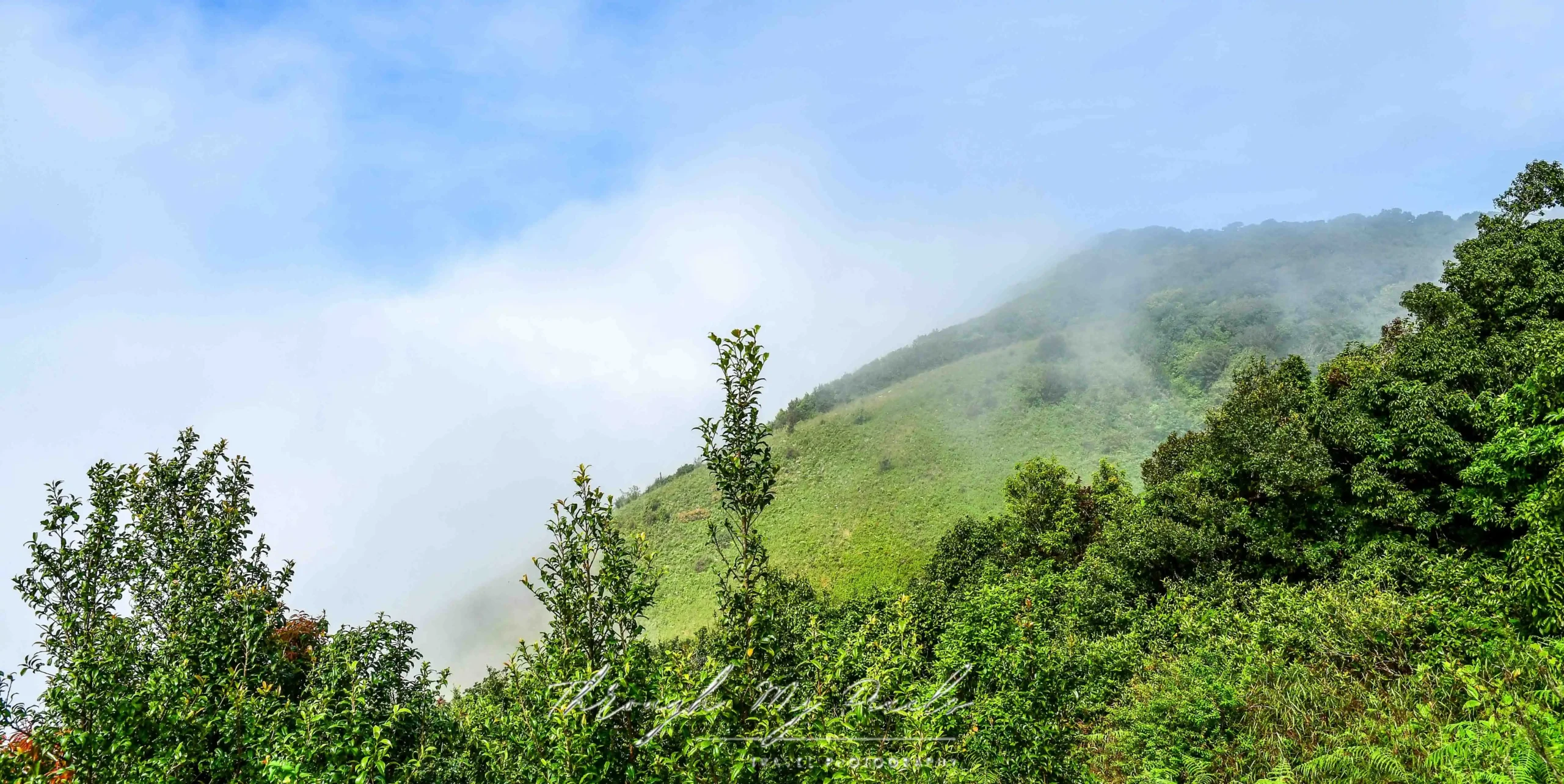
    We strolled at a leisurely pace, taking about 30 min, while pausing often to enjoy the tranquil, misty landscape of thick moss, tall trees and crisp mountain air. Certainly a relaxing walk for all ages. Just be careful if it has rained, as the boardwalk can be a bit slippery.

    Tall canopy at Ang Ka Nature Trail

    Kew Mae Pan Nature Trail

    On the other hand, the Kew Mae Pan trail is more for the adventurous. The total distance is about 3km, 10 times the length of the Ang Ka Nature Trail, with higher elevations and more rugged terrain. The journey takes about 2 to 4 hours, depending on the individual. It’s not suitable if you have mobility issues but the views make every step worth it. There’s a reason why it’s among the most popular hiking routes up here.

    Kea Mae Pan viewing point

    At 2,200m, you’ll reach one of the most iconic panoramic viewpoints in the region. On a clear day, you’ll see a sea of clouds blanketing the valleys below.

    The trail route below might give you a good idea of what to expect.

    Powered by Wikiloc

    📌 Note: The trail is closed from June to October (rainy season). You cannot venture into this area on your own – it is compulsory to hire a guide. You’ll be asked to pay 200 THB per group at the entrance and a guide from the local Hmong hill tribe will lead you on the journey.

    Do not be misled by their looks or size, though. They have been doing this for a long time and have guided many tourists on the route.

    Our guide was amazing — quick on her feet and knowledgeable. We didn’t finish the loop (we had kids and seniors waiting), but the experience was incredible. We missed the Royal Pagodas viewpoint, but it gives us a reason to return.

    Royal Pagodas at Doi Inthanon
    Photo of the Royal Pagodas from Freepik.

    Anyways, for those of you who are interested in this trail and want to feel like Frodo in the Fellowship of the Ring (we certainly felt like that with the bamboo hiking sticks), pin Doi Inthanon National Park and the Kew Mae Pan Nature Trail into your itinerary.

    Wachirathan Waterfall

    Another spot you should not miss is the Wachirathan Waterfall. While not a very tall one at 80m, it’s arguably the most popular and the most impressive at Doi Inthanon National Park. The viewing platform is just steps from the car park, and the spray from the falls is refreshing and energising! There’s a cafe nearby where you can grab a cuppa coffee and just enjoy the waterfall.

    The waterfall is definitely one of the favourite photo spots in the area. But don’t go too near else your camera equipment is going to get all wet.

    Photography tips

    • Capture people in the frame to show scale.
    • Try long exposure shots to give the water a silky effect. This is best taken with a tripod so you can keep the camera stable during the long exposures.
    • If you’re lazy like I was (no tripod), just hold your camera steady, lower the shutter speed, and experiment! This can also be done on a mobile phone. Use pro mode or manual, set shutter speed to 1-4 secs and ISO as low as possible.
    • Don’t just focus on the waterfall. Explore the surrounding areas, where the water flows,etc.
    • For the trails, capture the nature around you. The tall canopies, close-up of the moss, fungi, wildlife or little creatures if you can spot them.
    • Wide shots of panoramic views or “sea of clouds” are must-haves.

    Getting to Doi Inthanon National Park

    First, note that there is an entrance fee of 300 THB per adult for all foreigners.

    The best way to get around Chiang Mai, if you are in a big group, is to book a driver with a van. There were 13 of us so we booked 2 drivers and 2 vans for our entire trip, which makes it a lot easier for us to go wherever we want and adjust our itinerary accordingly. So getting to Doi Inthanon from our hotel at the Old City was a breeze. It’s a 2-hr journey.

    If you’re travelling solo or as a couple and if you prefer a more free and easy trip, then get a taxi to bring you up the mountain.

    There’s a lot to see and cover in Doi Inthanon which will take more than a day. In which case, consider joining day tours where you get a guide to bring you on the best spots. For instance, Klook offers a variety of them.

    Here are two options:

    1. Doi Inthanon National Park Day Tour (≈ USD 56/adult):
      Includes Wachirathan + Mae Klang Waterfalls, Karen Hill Tribe Village, Royal Pagodas, and more.
    2. Eco-Adventure Tour (≈ USD 83/adult):
      This is a new tour. A full day of guided hikes, bamboo rafting, swimming, lunch, and even tree planting! There’s also a 2-day option with overnight village stay.

    This post may contain affiliate links. If you click on them and make a purchase, I may earn a small commission at no extra cost to you. Thank you for your support!

    Klook.com

    Whether you’re a casual nature lover or a full-blown hiker, Doi Inthanon National Park has something for everyone. From mystical cloud forests to refreshing waterfalls and sky-high viewpoints, it’s a highlight of any Chiang Mai itinerary.

  • Into the Blue: Discovering Lake Jūniko

    Into the Blue: Discovering Lake Jūniko

    If you’re visiting the UNESCO-listed Shirakami-Sanchi mountains, make sure to carve out time for Lake Jūniko (十二湖).

    Lake Jūniko was formed in 1704 when a major earthquake blocked the mountain streams. Jūniko means 12 lakes in Japanese. From the summit of Mt. Ozukure (1,458m), the Ōkuzure Observation Deck offers a panoramic view of 12 bodies of water, giving the area its name. However, the region is actually home to 33 lakes and ponds, among the most famous being the blue pond Aoike. Lake Jūniko is one of those places in Japan where you feel time slows down, and nature whispers a thousand secrets.

    Lake Jūniko landscape view

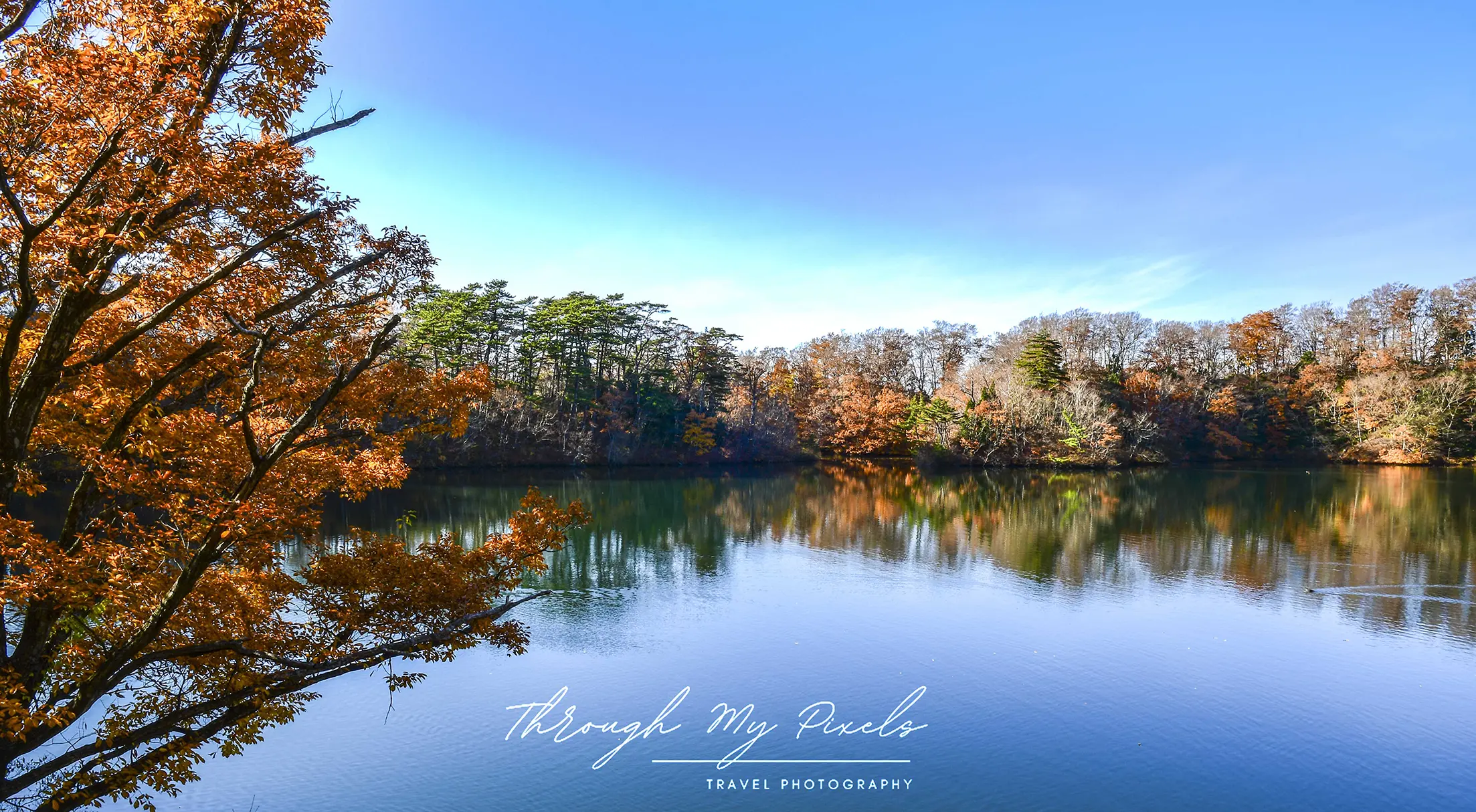
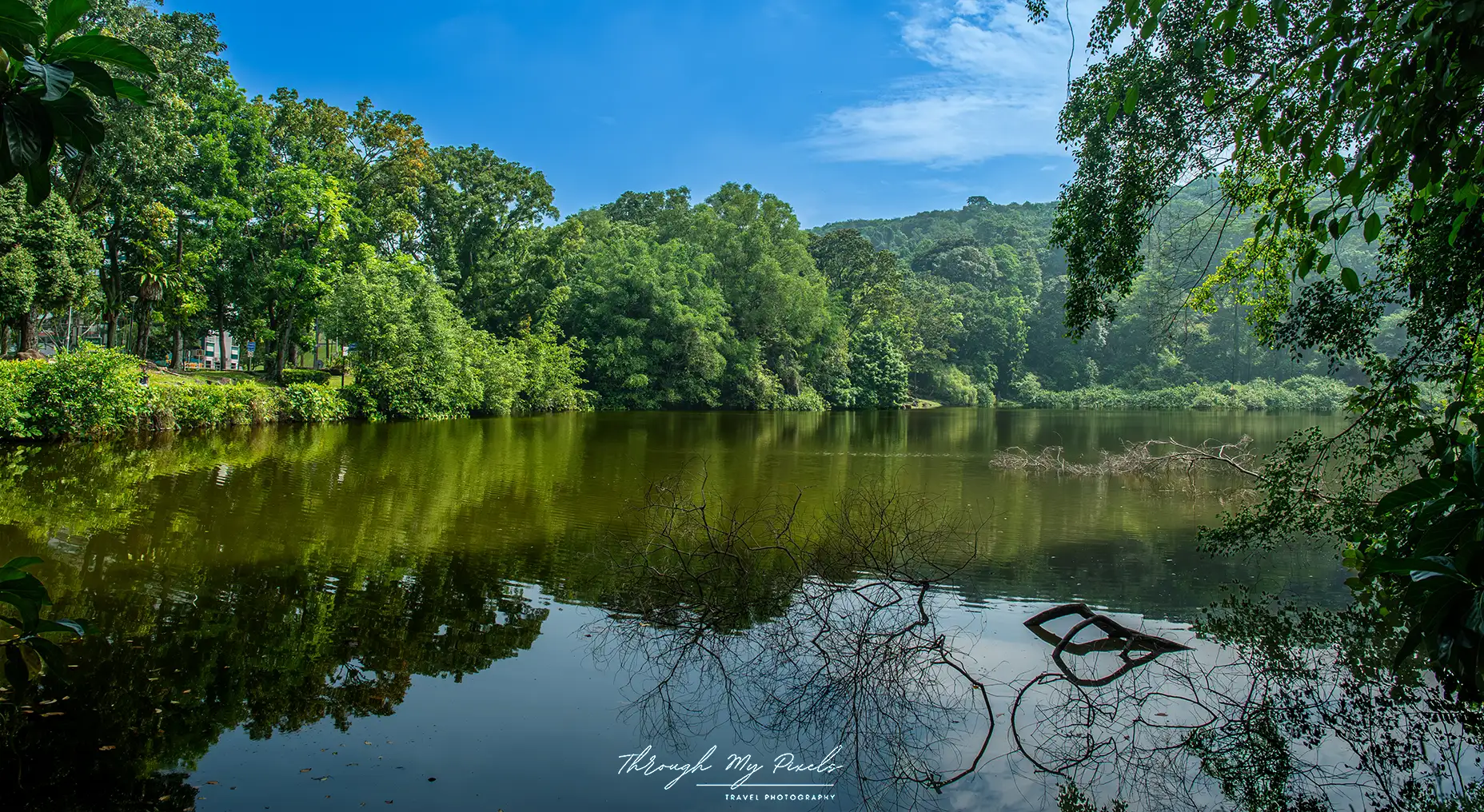
    The mirror lake reflections – no matter the angle, the view was just marvellous.

    Can you hear its secrets?

    We were struck by how idyllic Lake Jūniko felt – the stillness, the serenity. It had a completely different energy compared to Oirase Gorge. At Oirase Gorge, you’re guided by the constant, melodic rush of the stream at every turn. But here, at Lake Jūniko, it’s the rustling of the leaves and the gentle chorus of birdsong that accompany your steps. Both leave you hanging for more. Indeed, we could just sit there, basking in its tranquillity.

    Forest Bathing

    Forest bathing or Shinrin-yoku, is the Japanese practice of spending therapeutic time immersed in nature. A walk through the serene paths of Lake Jūniko is exactly that – a respite from the fast pace of urban life that so many of us crave for our mental well-being.

    Photograph of a sign to breathe deeply

    Treat yourself well. You’ve earned it.

    You’ve made it this far, so give yourself permission to slow down. Don’t rush.

    Listen to the chirping of the birds,

    Watch the ducks glide across the glassy blue waters,

    Breathe in the crisp, clean air.

    It’s the simplest and purest gift nature offers.

    Getting There

    From the JR Jūniko Station, you can either walk to Lake Jūniko, which takes around an hour, or grab a 15-min Kōnan bus (弘南バス) ride – Jūniko Line (十二湖線) – to the trail entrance. The bus operates between late April and November. Depending on how you want to explore the area, get off at either Ōike (王池前) or Oku Jūniko Parking (奥十二湖駐車場). You can refer to the bus schedule here.

    Hiking trails

    Its hiking trails are popular with visitors. A 40-min route starting from the souvenir shop Mori-no-Bussankan Kyororo takes visitors to Aoike, Ketoba-no-Ike Pond, lush beech forests, Wakitsubo-no-Ike Pond (沸壺の池) and Ochikuchi-no-Ike Pond (落口の池).

    Aoike (青池) is an emerald blue pond. If you’re lucky, the sun shining through the trees will make the waters of Aoike glisten even more vividly.

    Ketoba-no-Ike Pond (鶏頭場の池) is one of the largest lakes in the area. The shape of the lake is said to be in the shape of a chicken’s head – if you view it from a helicopter or a mountain lookout. Hence, the name Ketoba.

    There are also longer trails you can consider. I’ve done a simple illustration of the two routes.

    Lake Juniko trail routes

    Photography tips

    1. Chase the reflections
      The stillness of the lakes makes for perfect mirror-reflection shots. Early mornings or late afternoons are the best times to capture these.
    2. Try low, shoot wide
      Consider using a wide-angle lens if you are using a DSLR or set your mobile phone to wide mode to capture the expansiveness of the forest and its canopy or the vastness of the lakes. Try kneeling or placing your camera close to the water’s edge for a more immersive, layered shot.
    3. Focus on details
      Besides the big lake shots, zoom in on leaves floating on water, tree bark textures, or the play of light through the beech trees on the forest path. These small moments add richness to your story.
    4. Capture candid connections
      Bring your photos to life by including people interacting with the environment —friends walking along the beech path, someone pausing in awe by Aoike, or hikers immersed in conversation. These human moments add warmth and relatability.
    5. Respect the silence
      Let the mood guide your photography. The stillness and serenity of Jūniko come across best when you capture it without overediting—embrace the soft shadows and natural tones.

    This post may contain affiliate links. If you click on them and make a purchase, I may earn a small commission at no extra cost to you. Thank you for your support!

  • The ebbs and flows of Oirase Gorge and Lake Towada’s beauty

    The ebbs and flows of Oirase Gorge and Lake Towada’s beauty

    This was the reason why we wanted to come to Aomori. Once again, it was the travels of Singapore’s Mediacorp artistes Jeremy and Jessica that sparked our wanderlust – their visit to Oirase Gorge (奥入瀬渓流) on the Double J Baecation programme drew us in immediately.

    Oirase Gorge is a must-see when exploring Aomori and the Tohoku region. It is a mesmerising 14km of unspoiled natural beauty. From cascading waterfalls to mossy rocks and winding trails alongside crystal-clear streams, it’s the perfect escape away from the hustle and bustle of daily life into Japan’s serene countryside.

    Whether you’re a nature lover, photographer, or just looking to breathe in fresh air, Oirase Gorge promises an unforgettable experience.

    Our trail: From Kumoi-no-taki Falls to Lake Towada

    The entire Oirase trail stretches 14km, from Yakeyama to Nenokuchi, where Lake Towada appears in full splendour. It takes about 5 hr to walk the full trail – but like most, we started somewhere midstream, at Kumoi-no-taki Waterfall.

    Waterfall highlights:

    • Soryu Waterfall
    • Choshi Otaki Falls (the largest waterfall in the gorge)
    • Kumoi-no-taki Falls
    • Shirakinu Waterfall
    • Tamadare Waterfall

    Tip: To truly experience its beauty, stay at least for a night , like at the Hoshino Resorts Oirase Keiryu Hotel. It’s pricey but oh, so worth it.

    We began our trek at 9.30am. On paper, it is a 2-hr journey to Nenokuchi. We took a leisurely 3-hr walk with photo stops and rest stops.

    The place is massive, which would be too much to cover in a single day. This was our first experience there but we’ll be sure to return to experience the rest of it!

    Lake Towada (十和田湖, Towadako)

    Lake Towada and Oirase Gorge are part of the larger Towada Hachimantai National Park. The lake was formed by volcanic activity about 200,000 years ago and is known for its deep blue waters. To enjoy its breathless scenery, hop on a sightseeing boat to immerse yourself in the different views of the lake and its luscious mountains. There are two routes with about 5 to 6 rides each day between April to November. Unfortunately, we didn’t have time for this.

    Some photography tips

    • Go early:
      I like to work with natural light. Mornings are good as the sun isn’t too hot and the light is not so harsh. If you are willing to sacrifice sleep to rise up early, daybreaks are nice as they make for colourful skies. Early mornings are also a good time to capture light rays peeking through the forest foliage.
    • Bring a tripod (if you can):
      Oirase Gorge is famous for its flowing streams and waterfalls. A tripod helps you capture that silky water effect with slower shutter speeds. Even a mini tripod works if you prefer to travel light! Or if you have sturdy hands, you could still attempt to shoot a few seconds of long exposure.
    • Mind your footing:
      Trails are easy to follow but can be slippery or rocky in places and some run close to the stream. Wear good walking shoes and take your time.
    • Experiment with angles:
      Instead of shooting everything straight on, try low angles, near the stream or frame your shots through tree branches. Go wide to also capture the expansive woods and the grandeur of towering trees, or the vastness of Lake Towada.
    • Capture the details:
      Besides the big waterfalls, don’t forget the little scenes — mossy rocks, colourful maple leaves, winding streams. Sometimes the small moments tell the best stories.
    • Golden hour
      If you can stay till sunset, the colours over Lake Towada are breathtaking. The warm light adds a soft glow to everything — perfect for dreamy landscapes.
    • Watch your time and enjoy:
      It’s easy to get caught up and forget about time sometimes. As Oirase Gorge is huge, do keep track of time and where you are. Take note of the bus schedule and its pick-up locations so that you can catch a ride back. Buses are not very frequent if they are off-season. Walking back could take another 2 hr or more, depending on how much ground you need to cover. We would know because we missed the bus. But luckily, we met a very kind restaurant owner at Lake Towada who helped us to call for a cab and even luckier when a Taiwanese couple who stayed at the same hotel spotted us and asked to share the ride with us. Cabs are expensive in Japan, you see.

    Scan this QR code which gives a very good illustration of the Oirase Gorge walking trail, featuring the various highlights along the way and the walking time required.

    Image source: JNTO

    🌿 Remember: There’s no “perfect” shot. It’s about capturing how the place makes you feel.


    Here’s the Double J Baecation episode if you are interested to see Oirase Gorge through their eyes.

    There’s a sense of peace and tranquillity at Oirase Gorge and Lake Towada that’s hard to put into words — it’s in the whisper of the stream, the golden dance of autumn leaves, and the reflections on a still lake.

    If you’re planning a trip to Tohoku, don’t miss this little slice of paradise.

    This post may contain affiliate links. If you click on them and make a purchase, I may earn a small commission at no extra cost to you. Thank you for your support!